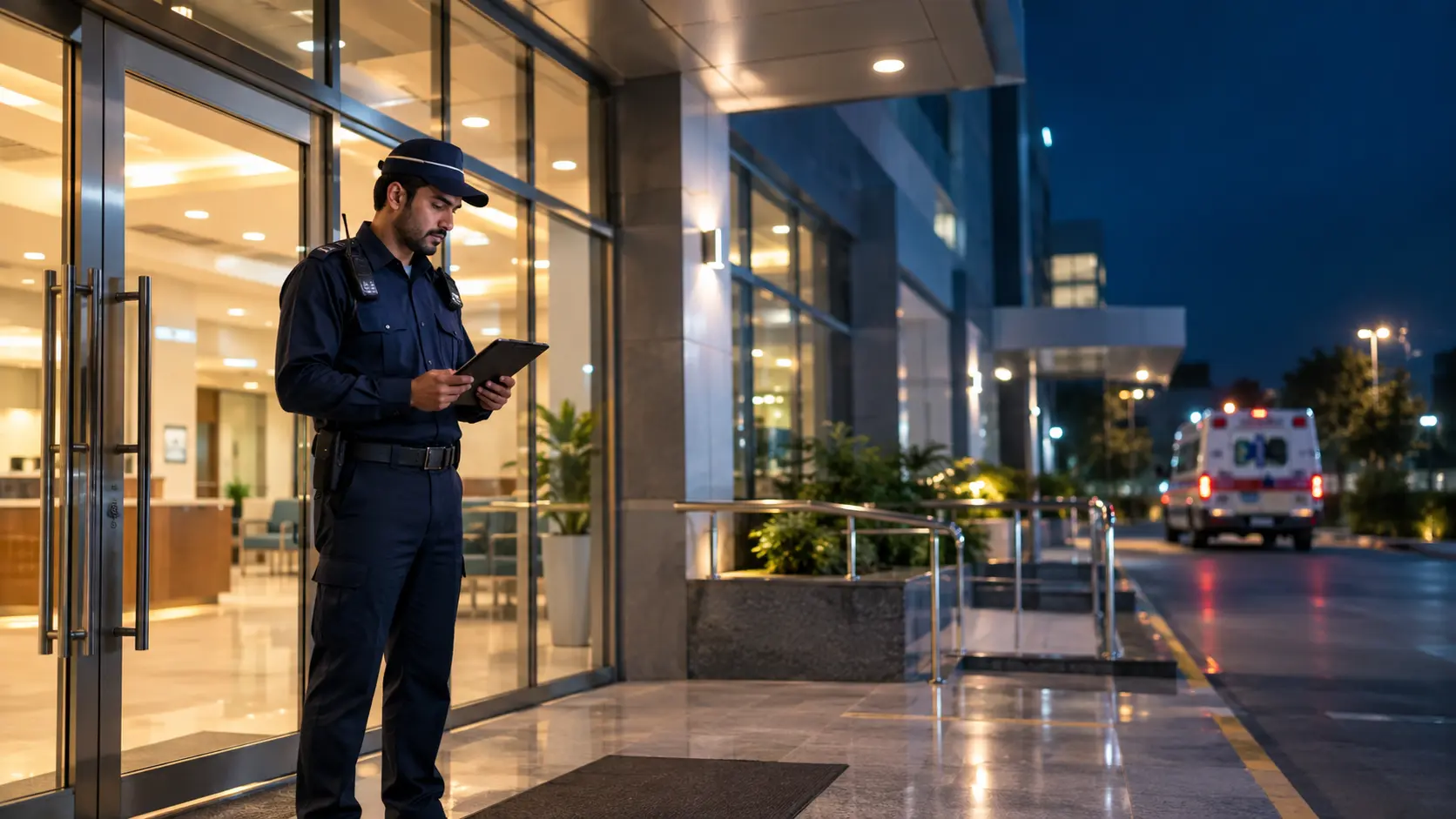
Hospital Security After Visiting Hours: What Patients and Staff Deserve
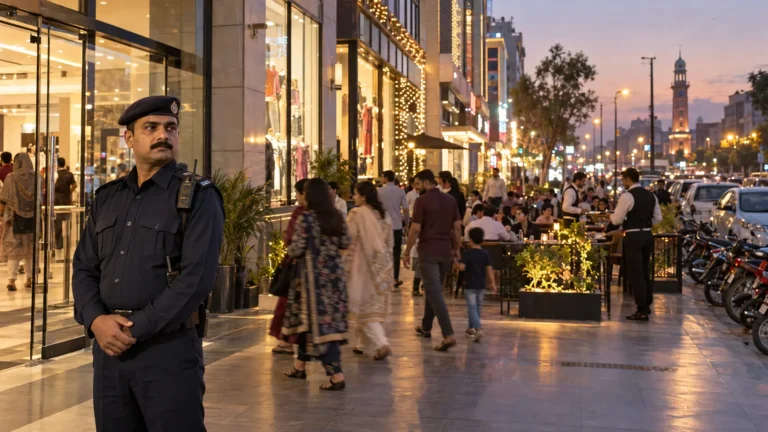
Walk past any hospital in Lahore around nine at night and you will notice something. The main gate is still open, the emergency department is lit up like midday, and somewhere near the entrance a lone guard is deciding who gets to walk through the door and who does not. A hospital never really shuts down. Yet hospital security, the actual trained presence protecting patients and staff, often quietly clocks out the moment official visiting hours end.
That gap between a building that keeps running and a security plan that stops paying attention is where most of the trouble starts. An attendant of a trauma patient arrives furious at midnight. A nurse finishing a double shift walks alone to a dark parking area. A stranger wanders a maternity ward corridor because nobody checked who he was there to see. None of this is unusual. It is simply what happens when the hours after visiting time get treated like an afterthought.
Why Risk Rises the Moment Visiting Hours End
During the day, a hospital polices itself without even trying. Doctors move between wards, families crowd the corridors, cleaning staff pass through every few minutes, and anyone acting oddly gets noticed fast simply because so many eyes are around. That natural oversight fades once the crowd thins out and the visitor count drops toward zero.
What remains running the building overnight is a much smaller team. Fewer nurses, fewer doctors, fewer people around to catch something before it escalates. Meanwhile the emergency ward keeps its doors open to the public no matter the hour, which means anyone can still walk in, planned appointment or not. Pair a thin staff presence with an entrance that never fully locks, and the result is exactly the kind of conditions where incidents happen: arguments that turn physical, unauthorized visitors slipping past a tired guard, equipment or medicine going missing from a storeroom nobody is watching closely.
This is not a sign of a poorly run hospital. It is simply what happens when a building built for constant public access has its people spread thinnest during the hours when tension often runs highest.
What Often Goes Wrong Once the Crowd Thins Out
Hospitals that scale back their guard presence once visiting hours end tend to run into a familiar set of problems.
- Unattended entry points. Once the main gate loses its guard or gets left on autopilot, people can walk in through the emergency entrance, a side door, or a loading area meant only for staff.
- Attendants arriving in crisis mode. A patient’s condition can turn serious fast, and family members showing up in a panic at 2am do not always stay calm. Without someone trained to calm a tense situation down, a disagreement with hospital staff can turn physical within minutes.
- Theft from pharmacies and equipment stores. Medicine cabinets, surgical tools, and diagnostic machines sit in rooms that see far less foot traffic overnight, making them easier targets.
- Harassment aimed at night shift workers. Female nurses and junior doctors on the night rotation are often the most exposed, whether inside a quiet corridor or walking to their vehicle once the shift ends.
- Weak checks around maternity and newborn wards. A ward holding infants with a loose visitor verification process is one of the riskiest gaps any medical facility can leave open.
None of these problems are hypothetical. Each one shows up regularly in hospitals that treat overnight coverage as optional rather than essential.
What Patients Deserve After Visiting Hours
A patient recovering overnight is not asking for much. Quiet. Undisturbed rest. The confidence that whoever walks past their bed at 3am actually has a reason to be there. None of that happens on its own.
Real overnight protection means unauthorized visitors get stopped before they reach a ward, not noticed after the fact. It means a woman staying in a shared room overnight doesn’t have to wonder who else has access to that floor. It means families waiting outside an operating theatre get looked after too, guided to a proper waiting area instead of left to linger in a corridor nobody is monitoring.
Patients place their safety in a hospital’s hands the moment they are admitted, and that trust should not come with an expiry time tied to the visiting hours sign at the front desk. Good security keeps working long after the last scheduled visitor has gone home.
What Hospital Staff Deserve After Hours
Nurses, doctors, and support workers carry a hospital through the night, often with a fraction of the daytime headcount. They deserve a workplace that looks out for them with the same care they give their patients.
That starts with something as simple as a safe walk to the parking area after a night shift, ideally with a guard escorting anyone leaving alone in the early hours. It includes a visible, trained presence near the emergency ward, where tempers run highest and where personnel are most likely to face an aggressive attendant or a volatile situation. It means a nurse who feels threatened by a visitor has someone to call who arrives within minutes, rather than someone she has to track down herself while trying to keep working.
Staff retention in healthcare is difficult enough without adding “no one protects me at night” to the list of reasons someone eventually quits.
What a Strong After Visiting Hours Security Plan Includes
A hospital does not need to lock down like a military installation once visiting hours end. It needs a plan matched to its actual risk at that hour, built around a handful of core pieces.
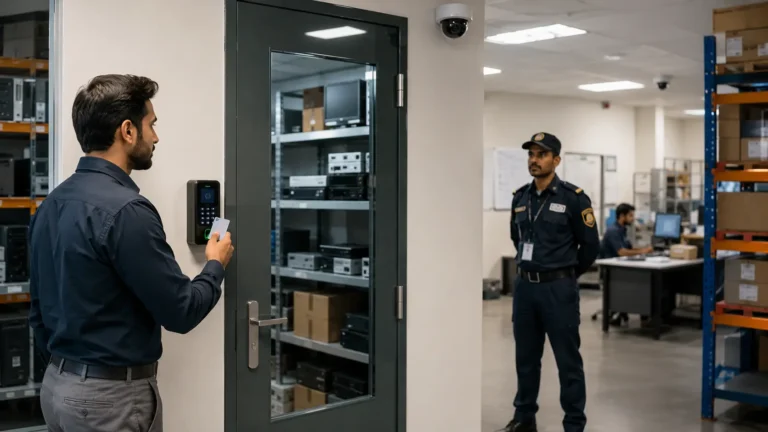
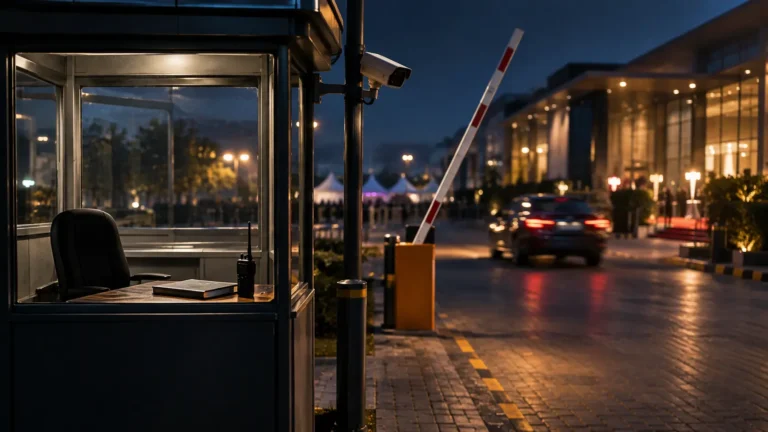
- One controlled entry point after the cutoff. Every other door gets locked or alarmed, and anyone arriving late funnels through a single checkpoint where a guard can actually see who is coming in.
- ID checks and a visitor log for late admissions. Even outside normal hours, anyone accompanying a patient should be logged properly, not waved through because it is late and the guard wants to avoid an argument.
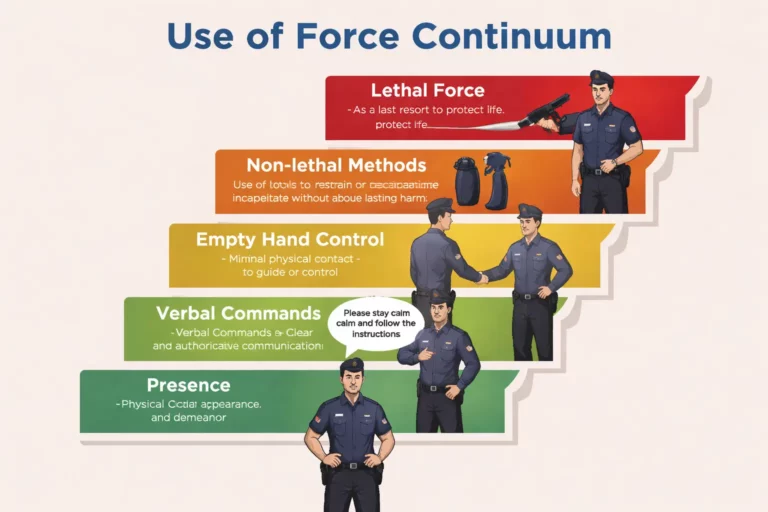
- A mix of armed and unarmed guards placed where they matter. Emergency departments and cash handling areas typically call for an armed presence, while general corridors and ward access points are usually well covered by trained unarmed guards.
- CCTV paired with someone actually watching it. Cameras alone rarely stop an incident. Someone needs to monitor the feed and respond the moment something looks wrong.
- An escort service during shift changes. A five minute walk to a car should not be the most dangerous part of anyone’s job.
- Field supervisors making random overnight checks. A guard posted alone for eight hours can lose focus, and regular spot checks from a supervisor keep the whole overnight operation sharp.
- A clear escalation protocol. Everyone on site, from the front desk to the night nursing supervisor, should know exactly who to call and how quickly help will arrive.
None of this needs to feel intrusive to patients or their families. Done well, it’s barely noticeable, which is usually a sign that it is working the way it should.
How Clutch Security Services Handles Hospital Security After Hours
At Clutch Security Services, a plan for the hours after visiting time starts the same way it does for any property: a proper site assessment before a single guard gets deployed. For a hospital, that means walking the building during the hours visiting stops, mapping every entrance, and identifying exactly where the coverage gaps sit instead of guessing.
From there, armed guards get placed at points carrying real risk, such as emergency entrances and areas handling cash or medicine, paired with unarmed guards trained specifically in visitor screening and calming tense situations for corridors, wards, and parking areas. Field supervisors check in through the night, and every guard reports through a system that keeps hospital management aware of what is happening on their property in real time.
It is the same standard held for the factories, banks, and offices protected across Lahore, Gujranwala, Faisalabad, Sialkot, and Kasur, adjusted for a building that never fully closes and cannot afford a gap in coverage once the lobby goes quiet.
Frequently Asked Questions About Hospital Security After Hours
Do hospitals actually need guards once visiting hours are over?
Yes. Emergency departments typically stay open to the public around the clock, and staffing usually drops sharply overnight. That combination is exactly when a trained guard presence matters most, not least.
Should hospital security guards be armed or unarmed?
Most hospitals use a mix. Unarmed guards handle visitor screening, ward access, and general patrolling, while armed guards are usually placed at higher risk points such as the emergency entrance or areas storing cash and controlled medicine.
How many guards does a hospital need overnight?
That depends on the size of the facility, the number of entry points, and how the emergency department is laid out. A proper site assessment is the only reliable way to answer this instead of guessing at a headcount.
Can a hospital enforce visiting hours after they officially end?
Hospitals routinely set visiting hours, and pairing that policy with trained guards at the entrance is what actually makes it stick, rather than becoming a rule nobody follows after 9pm.
Protect Your Hospital Around the Clock
If your hospital’s security plan quietly clocks out the moment visiting hours end, that gap is worth closing before it turns into an incident report instead of a policy update. Clutch Security Services carries out proper site assessments, places trained armed and unarmed guards where the risk actually sits, and keeps a supervisor checking in through the night for hospitals across Lahore, Gujranwala, Faisalabad, Sialkot, and Kasur.
Reach out through our contact page to schedule a site assessment and see exactly where your after hours coverage needs strengthening.