Textile Mill Security in Faisalabad: Protecting Raw Material and Finished Stock
Walk down Jaranwala Road or Sargodha Road after midnight and the mills are still running. Power looms hum through the night, trucks queue at weighbridges before sunrise, and godowns sit packed with cotton bales on one side and finished fabric on the other. Faisalabad earned its name as the Manchester of Pakistan because its textile sector never really stops, and that round the clock rhythm is exactly why security here looks different from a typical office or retail setup.
For a spinning unit, weaving factory, or composite mill, the two things that matter most financially, raw material coming in and finished stock waiting to go out, spend most of their time sitting in a godown or yard with limited supervision. A single bad night can wipe out weeks of margin. This is where a structured security plan, not just a watchman at the gate, starts to matter.
Clutch Security Services works with factory owners across Faisalabad’s industrial belt, from Khurrianwala and Jaranwala Road to Millat Road and the Sargodha Road cluster, so this piece looks at what actually puts a mill’s material at risk and what a properly run guard deployment does about it.
Why Textile Mills Carry a Different Risk Profile
A textile mill is not just another factory with a boundary wall. A few things set it apart.
Two high value stockpiles under one roof
Raw cotton, yarn, and finished fabric or garments all sit inside the same compound at different stages. Unlike a business that only stores one type of stock, a mill has to protect material moving in through the gate and finished goods moving out through the same gate, often on the same day.
Round the clock operations
Many units run multiple shifts, and some never shut down at all. Night shifts bring smaller crews, fewer people watching common areas, and more opportunity for anyone with bad intentions to move around unnoticed.
Large, open layouts with several access points
Mills tend to spread across a big footprint: production floor, storage godowns, a weighbridge, a loading dock, staff quarters, and often a separate gate for trucks. Each entry point is a place where material or people can slip through without proper checks.
Heavy dependence on outside labor and transport
Loading, unloading, and dispatch usually involve daily wage labor and transport contractors who are not permanent staff. Good security is not about distrust, it is about having a system that verifies who is on site and why, every single time.
A genuine fire hazard
Raw cotton, lint, and synthetic fiber are highly combustible, and mill layouts often place storage close to production. Fire safety and security overlap here more than owners realize. A guard trained to notice an unattended heater near stored bales or a blocked fire exit is preventing a loss just as much as one who stops a thief.
Where Mills Actually Lose Material
The risks are rarely dramatic. Most losses come from small, repeated gaps rather than one big break in.
At the weighbridge and unloading point.
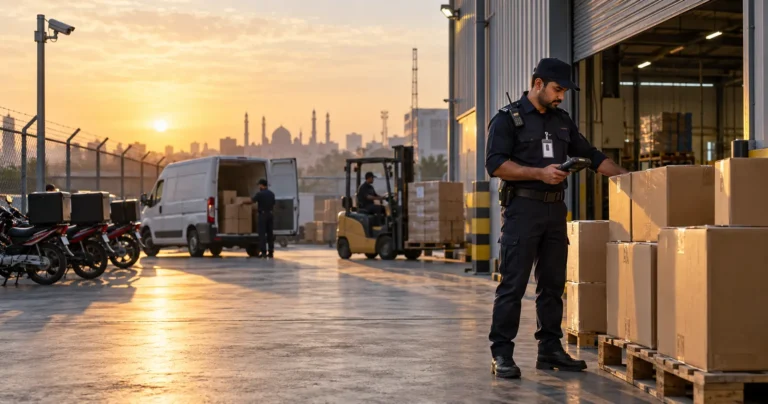
Short weight on incoming cotton, a bag or two skimmed off during unloading, or a driver’s helper walking out with material tucked under a jacket. None of this shows up as a single large theft, it shows up months later as a stock reconciliation that doesn’t add up.
In the finished goods godown.
Fabric rolls or packed garments waiting for dispatch are easy to move and easy to sell. A godown without controlled access, a logged inventory count, and a guard checking what leaves against what was ordered is an open invitation.
During loading for dispatch.
This is where internal staff and outside transport meet, and it is also where collusion is most likely. A driver and a loader who know each other, an invoice that does not quite match the load, a truck that leaves without anyone actually checking the count against the gate pass.
Through unsupervised visitor and contractor movement.
Vendors, maintenance staff, and even buyers walking through the production floor without an escort can end up in storage areas they had no real reason to enter.
Overnight, when supervision is thinnest.
Night shifts, holidays, and Friday afternoons are consistently when incidents cluster, simply because fewer eyes are on the property.
What Proper Textile Mill Security Actually Covers
A guard standing at the gate is not a security plan. A working one covers several layers at once.
Site assessment before deployment.
Every mill is laid out differently, so the starting point should be a walk through the property with a security consultant who maps gates, storage zones, blind spots, and traffic patterns before deciding how many guards go where.
Gate and weighbridge control.
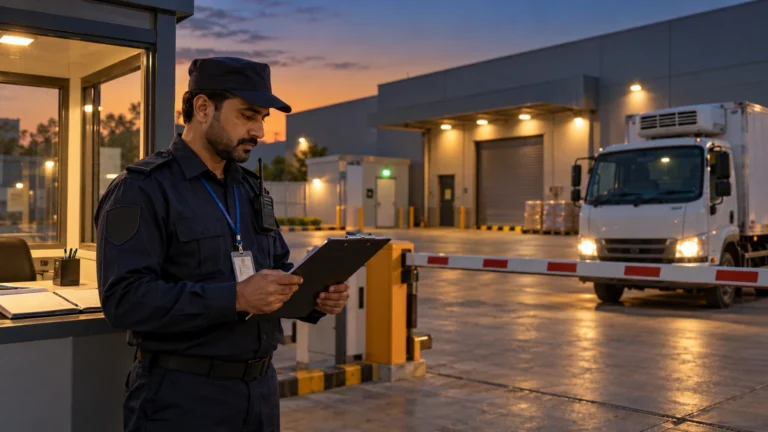
Every vehicle in and out gets checked against a gate pass, every driver and helper gets logged, and incoming material gets verified against delivery documents instead of being waved through.
Access control for storage areas.
Raw material stores and finished goods godowns should not be open to anyone who happens to be on site. Entry gets limited to authorized staff, and movement in and out gets recorded.
Scheduled and random patrols.
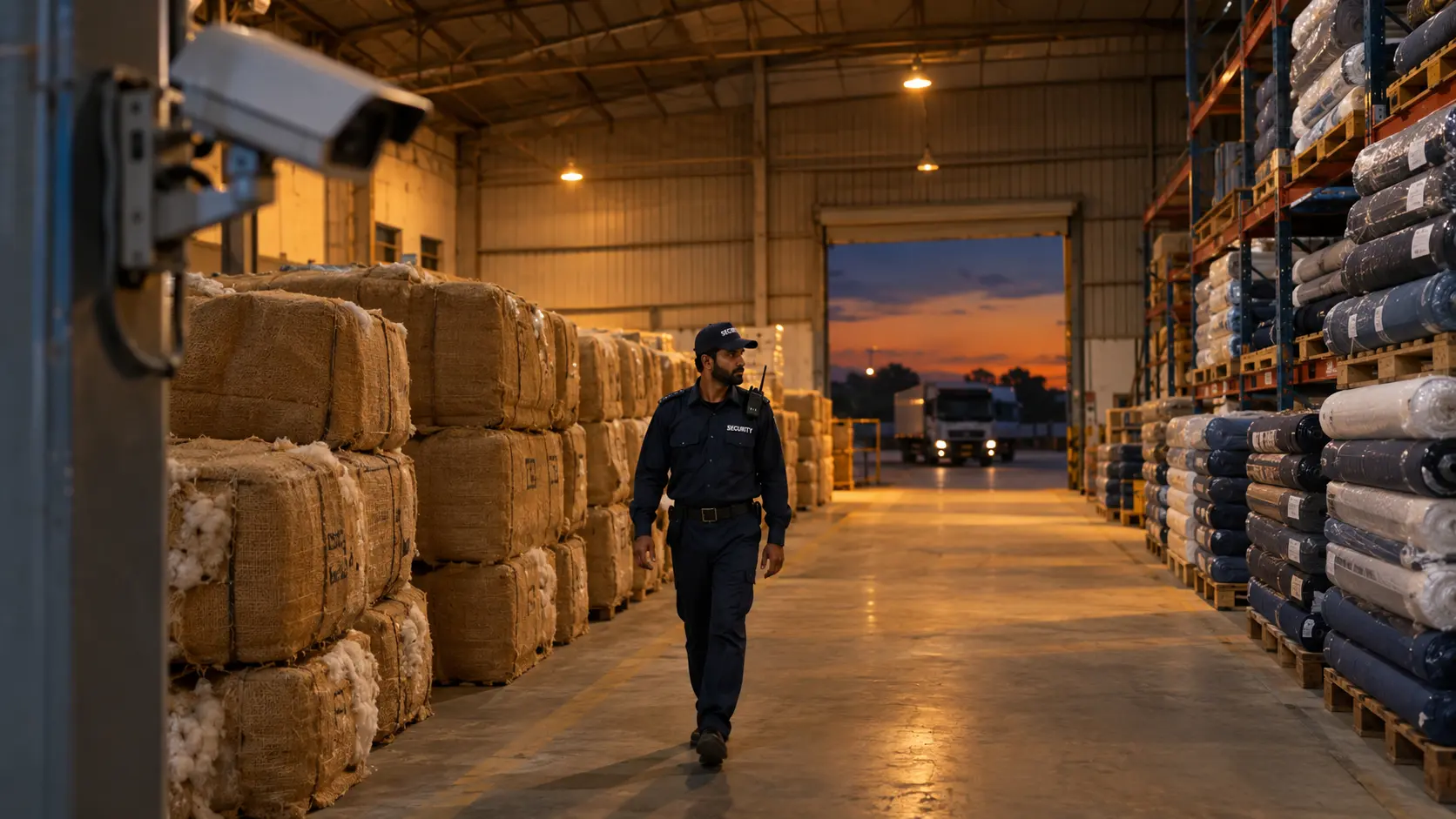
Perimeter walls, loading docks, storage zones, and staff areas all need regular rounds, documented through a checkpoint system so there is a record of what was checked and when, not just a guard’s word for it.
Fire watch as part of the job.
Guards trained to recognize fire risk, smoking near storage, faulty wiring, blocked exits, add a layer of protection that an untrained watchman simply will not catch.
Armed presence where the risk profile calls for it.
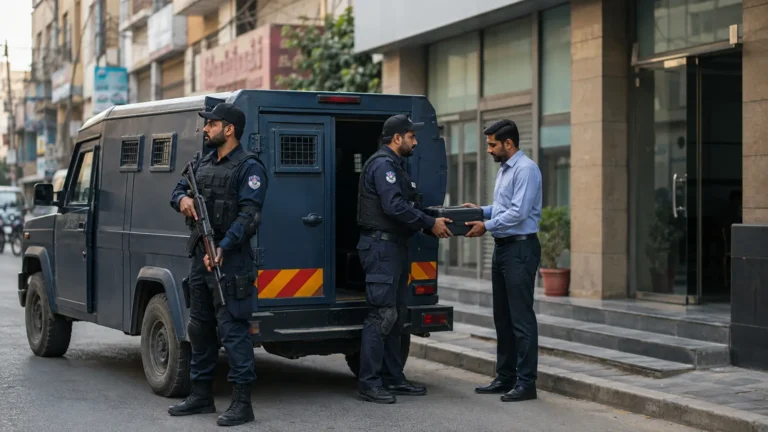
For mills holding high value stock or operating in more exposed locations, armed guards add a level of deterrence that unarmed staff cannot match, while lower risk areas of the same property can still run on unarmed coverage.
Supervision that does not stop at deployment.
Field supervisors need to actually visit the site, confirm guards are where they should be, and follow up the moment something looks off. A guard company that deploys and disappears isn’t offering security, it’s offering a uniform.
Why This Needs a Professional Provider, Not an Ad Hoc Arrangement
Plenty of mill owners still rely on a mix of an old family employee at the gate and a couple of guards hired informally. It works until the day it does not. A licensed security company brings a few things an informal setup cannot.
Guards go through background verification and identity screening before they are ever deployed on your property, so you know who is representing your business at the gate. Training covers more than standing at a post, it includes access control procedures, emergency response, and conflict management. Deployments come with documentation and compliance with provincial regulatory requirements for private security operations, which matters if you ever need to show due diligence to an insurer or a buyer conducting a factory audit. And supervision means someone above the guard is accountable for his performance, not just the guard himself.
For an export oriented mill, this last point carries extra weight. International buyers increasingly ask about factory security as part of their audit process, and a documented, professional setup is one more box that gets checked without a scramble.
Security Across Faisalabad’s Industrial Belt
Faisalabad’s mills are not concentrated in one neighborhood. Clusters sit along Jaranwala Road and Khurrianwala, Sargodha Road, Millat Road, and the formal estates managed under FIEDMC, each with its own mix of spinning units, weaving factories, and processing houses. Our security services in Faisalabad already cover textile units, spinning mills, and dyeing facilities across these areas, with deployment plans built around each site’s own layout and risk profile rather than a one size fits all package.
Frequently Asked Questions
Do textile mills in Faisalabad really need armed guards?
It depends on the mill. Higher value stock, wage cash handling, or a location in a more exposed part of the city usually justifies armed coverage, while a smaller unit with straightforward access points may be well served by trained unarmed guards. A proper site assessment settles this rather than a blanket rule.
Can guards be deployed to protect only the storage godown, not the whole facility?
Yes. Coverage can be scoped to specific zones, a raw material store, a finished goods godown, or the loading dock, depending on budget and risk. Many mills start with storage area coverage and expand once they see the results.
Should raw material and finished stock be protected differently?
Largely, yes. Raw material risk concentrates around the weighbridge and unloading point, where short weight and pilferage during offloading are the main concerns. Finished stock risk concentrates around the godown and dispatch process, where theft and unauthorized removal are the bigger threats. A good plan treats these as two separate problem areas, not one generic patrol route.
How fast can a mill get guards on site?
Standard deployment typically takes 24 to 72 hours once a site assessment is done, with faster turnaround possible for urgent situations.