Leather Goods and Garment Export Unit Security in Lahore
The order is packed. Cartons are labelled, the buyer’s requirements have been checked, and the shipment is waiting for collection. Production may be finished, but responsibility for the goods has not ended.
Those hours between packing and dispatch deserve close attention. A missing carton, an unauthorized stock movement or a vehicle released without proper checks can leave an exporter dealing with shortages just when there is little time to correct them.
Leather and garment export unit security in Lahore needs to cover more than the factory entrance. It should follow the movement of finished goods through storage, loading and release, with clear responsibility at each stage.
Why Finished Export Stock Needs Separate Protection
During production, materials move between people and departments. Once an order is packed, access should become more restricted. Finished leather jackets, handbags, wallets and garments should not remain as accessible as general production supplies.
Consider an illustrative situation: a packed order stays in a warehouse overnight because the collection vehicle is delayed. A maintenance contractor is still inside, the warehouse key changes hands during the shift, and another delivery arrives at the gate. Without clear records, several ordinary activities can create confusion around who accessed the shipment.
Security procedures should make it possible to answer four questions:
- Who entered the finished goods area?
- What stock moved, and who approved it?
- Which vehicle collected the consignment?
- Who authorized its release?
If those answers depend entirely on memory, the process needs tightening.
Restrict Access to Finished Goods Storage
An employee’s permission to enter the factory should not automatically allow access to every warehouse or packing area.
Management should identify who needs access to finished export stock and give the security team a current authorization list. Temporary access for cleaners, contractors or other staff should follow an agreed approval process.
Useful controls include:
- Recording entry into restricted storage areas.
- Keeping visitors with an authorized employee.
- Requiring approval for access outside normal working hours.
- Recording who receives and returns warehouse keys.
- Updating access permissions when staff duties change.
The aim is to keep work moving while making access accountable. A familiar face should still follow the same procedure.
Keep Samples, Rejects and Export Orders Clearly Separated
Garment and leather goods businesses may hold approved stock, samples, returned items, rejected pieces and scrap on the same premises. Their movement requires different approvals.
A sample leaving for a buyer meeting is different from a carton being collected for export. Neither should pass through the gate simply because someone says the items are “only samples.”
Each outward movement should have documentation appropriate to its purpose. Security personnel should check that the approval identifies the goods, quantity, destination and person authorized to take them.
Stores or dispatch staff remain responsible for confirming the contents and stock records. The guard’s role is to verify that the required checks and approvals have taken place before release.
Give the Loading Area Its Own Security Procedure
A secure warehouse can still lose control of stock during loading.
Vehicles arrive, workers carry cartons, drivers ask for directions, and dispatch staff handle paperwork. When several activities happen together, assumptions can replace checks.
A practical loading procedure should cover the following stages.
Before Loading Starts
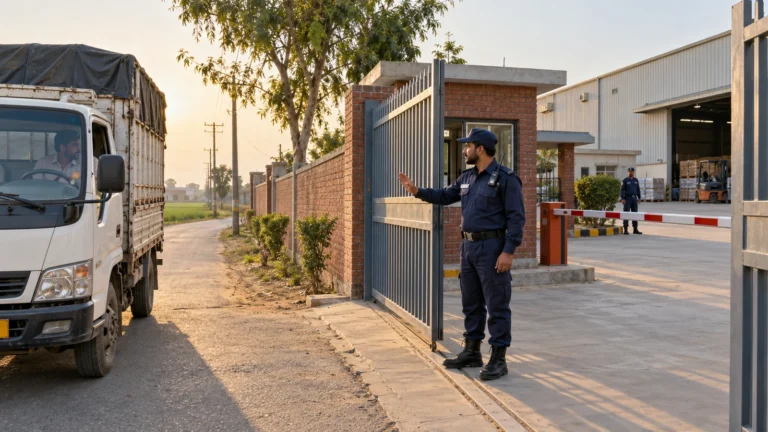
Confirm the collection against the approved dispatch schedule. Record the driver’s identity, vehicle registration and the company making the collection.
An unexpected vehicle, replacement driver or changed collection time should be referred to the designated dispatch contact.
While Goods Are Loaded
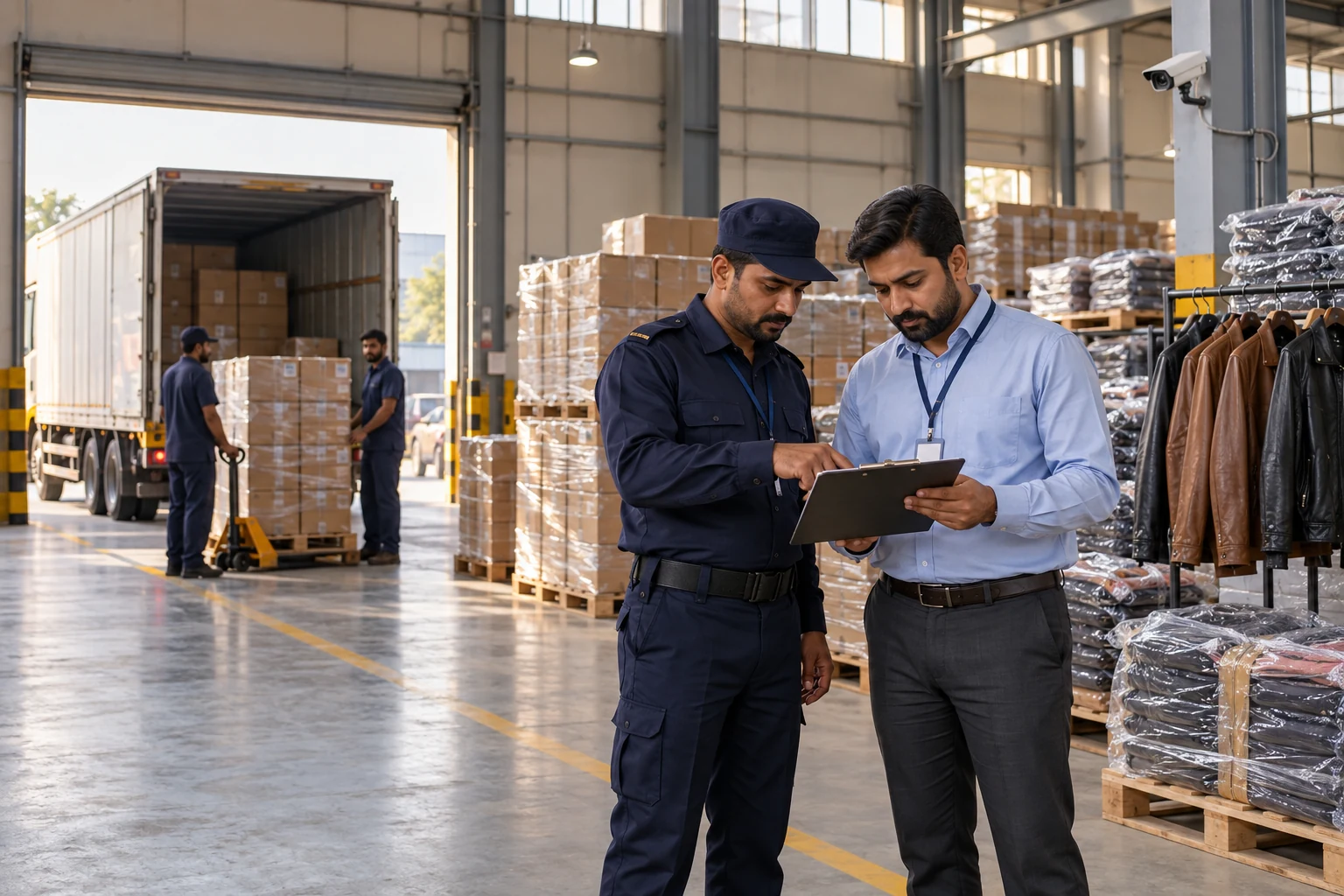
Keep unrelated visitors away from the loading area. The responsible warehouse employee should check carton quantities and shipment references against the approved documents.
Security should monitor access and report unusual movements, unattended goods or attempts to load items outside the agreed process.
Before the Vehicle Leaves
Check that the dispatch authorization is complete and relates to the vehicle at the gate. Record the departure time and any required seal details.
A vehicle arriving for collection does not, by itself, authorize the release of goods.
Set a Clear Rule for Late Collections and Dispatch Changes
Export operations can involve changed schedules. A collection may move into the evening, a vehicle may break down, or a driver may arrive after the dispatch office closes.
These situations need a workable approval route before they happen.
Written instructions should identify who can approve a late release and how the guard should confirm it. If the usual contact is unavailable, there should be a named alternative.
Approval should be verified through an established company contact method. A phone number supplied by an unfamiliar driver should not become the sole basis for releasing stock.
Where the necessary authorization cannot be confirmed, the shipment should remain on hold until the responsible manager resolves the issue.
Make Night Patrols Relevant to the Warehouse
A night patrol should involve more than walking past the same doors.
For an export unit, patrol instructions should reflect where finished stock is held and what activity is expected during that shift. Checks may include warehouse doors, loading entrances, boundary access points, lighting and signs of disturbance.
Guards should know whether anyone is authorized to work inside the storage area overnight. An open door during an approved stock check requires a different response from an open door in a building recorded as closed.
Records should identify the location, time and any issue found. “Everything checked” offers little help when management later needs to understand an incident.
Keep Security Responsibilities Separate from Stock Approval
Security works best when responsibilities are clear.
Warehouse staff confirm quantities and shipment details. Dispatch personnel arrange approved collection. Management defines who can authorize release. Guards control access, check the required documents and report exceptions.
Asking one guard to operate the gate, count a shipment, patrol the warehouse and approve a late collection creates an avoidable gap.
The deployment plan should account for tasks that happen simultaneously. During a busy loading period, the gate still needs coverage and other access points still need attention.
Use CCTV to Support Guarding and Records
Cameras can help management review access and loading activity, but footage is more useful when it connects to a documented event.
For example, an accurate dispatch time helps staff locate the relevant recording. A vehicle registration in the gate register helps distinguish one collection from another.
Camera coverage should be reviewed around warehouse entrances and loading areas, including whether stacked cartons or parked vehicles obstruct the view. Management should also confirm that recordings remain available for the period required by its operating procedures.
Guards need clear instructions for reporting a camera fault or an area they cannot observe properly.
Prepare a Proper Shift Handover
The incoming guard needs to know what remains unresolved.
For a leather goods or garment export unit, the handover should include:
- Shipments awaiting collection.
- Vehicles still inside the premises.
- Contractors or visitors who have not checked out.
- Keys currently issued.
- Doors, locks or lighting requiring attention.
- Stock movements awaiting approval.
- Incidents already reported to management.
This gives the next shift a usable picture of the site. It also reduces the chance that an unfinished task disappears between shifts.
Choosing Security Guards for an Export Unit in Lahore
Start with the way your premises operates. A small unit with one controlled entrance has different coverage needs from a factory with separate production buildings, warehouses and loading gates.
Before requesting a quotation, prepare details of working hours, access points, overnight stock storage and collection schedules. Explain any existing problems, such as unrecorded sample movements or unclear approval for late dispatches.
Clutch Security Services provides guarding arrangements that include access control, patrolling, visitor management and supervision, with deployment planning based on site requirements. Its security guard services in Lahore cover commercial and industrial premises. Clutch Security Services
For an export unit, the service discussion should translate those duties into written instructions for finished stock storage, loading activity and vehicle release.
Arrange Security for Your Leather or Garment Export Unit
Your finished order still needs protection while it waits for shipment. Clear access rules, supervised loading and documented release procedures help keep that responsibility visible.
Contact Clutch Security Services to discuss security guards for your leather goods warehouse or garment export unit in Lahore. Share your operating hours, storage layout and dispatch schedule so the team can assess the coverage required.
Call: 0300 1267869 (line 3001267869)
Frequently Asked Questions
Can security guards help protect finished garment stock?
Yes. Guards can restrict unauthorized access, patrol storage areas and check that outward movements have the required approval. Warehouse employees should remain responsible for stock counts and product verification.
Do export units need guards after production stops?
Coverage should reflect when goods remain on site, when people can access them and when collections occur. A closed production floor does not remove the need to protect a warehouse holding finished orders.
What should security check before a shipment leaves?
Checks should follow the site’s written procedure and normally include vehicle details, dispatch authorization, confirmation from the responsible employee and any required seal record.
How many guards does a garment factory need?
The number depends on entrances, building layout, operating hours, loading activity and patrol requirements. A site assessment should establish which duties need coverage at the same time.