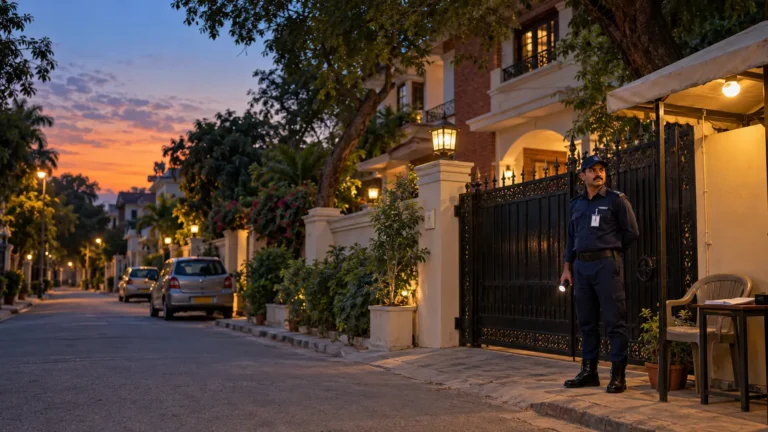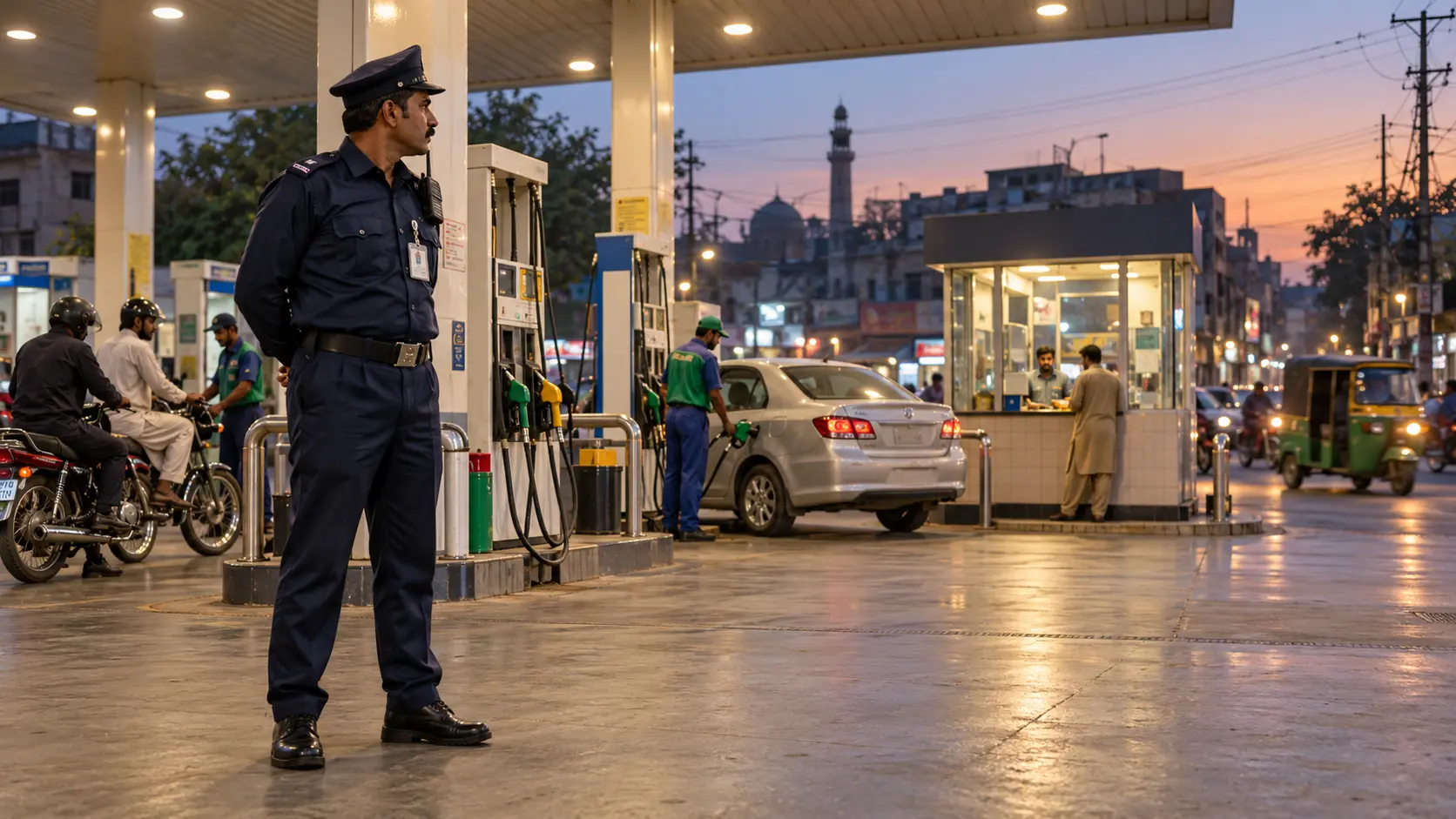
Security Guard Services for Petrol Pumps and CNG Stations in Lahore
Fuel stations carry a mix of risk that most businesses never deal with. A petrol pump or CNG outlet in Lahore holds cash on site almost every hour it’s open, stores pressurized and flammable product a few meters from where customers stand, and stays busy with a constant stream of vehicles and strangers, day and night. That combination makes these sites genuinely harder to protect than a typical shop or office, exactly the kind of risk profile our security guard services in Lahore are built to handle.
This post looks at what actually puts petrol pumps and CNG stations at risk, what a trained guard should be doing on site, and how to put together a deployment that fits a fuel station rather than a generic office post.
Why Fuel Stations Carry More Risk Than They Look
From the road, a petrol pump looks routine. Up close, a few things make it a different kind of target.
Cash sits on site for hours. Fuel is still paid for largely in cash across most of Lahore, and that cash collects at the counter through the day before it’s banked or handed off. A cashier’s office with a drawer full of notes and thin glass between them and the forecourt is an easy read for anyone casing the place.
Fuel and gas don’t leave much room for error. Petrol vapor and compressed natural gas are unforgiving. A dropped cigarette, a spark near the dispensers, or a leak that goes unnoticed for a few minutes can turn into a fire fast. This is part of why the Oil and Gas Regulatory Authority runs regular safety inspections at petrol pumps and CNG stations across Punjab, and why staff training in fire response matters as much as the extinguisher on the wall.
The rush before a price hike is its own hazard. Anyone who has driven past a Lahore petrol pump the night before a fuel price increase knows the scene: queues stretching onto the main road, horns, drivers cutting lanes, and staff trying to keep order while also running the pumps. That kind of crowd needs someone whose only job is managing it, not an attendant trying to do two things at once.
Night hours change the picture completely. Many stations run around the clock, and the quiet hours between midnight and dawn are when a station is most exposed. Fewer customers, fewer witnesses, and a cashier working largely alone is not a safe combination.
What a Trained Guard Actually Does at a Petrol Pump or CNG Station
Posting a guard at the gate isn’t the same as securing a fuel station. The work looks different once you break it down.
Watching the cash point. A guard positioned with a clear line of sight to the cashier’s counter, present during cash handovers or bank drops, closes the single biggest gap most stations have.
Reading behavior, not just checking faces. Someone circling the station twice, parking near the boundary without buying fuel, or lingering by the cashier’s window is a pattern a trained guard picks up on early. That’s the difference between stopping something before it starts and reacting after it already has.
Enforcing the basic safety rules that actually get ignored. No open flame near the pumps, no phone calls while refueling, vehicles not left running unattended at the CNG dispenser. Attendants are busy serving customers and can’t always be the ones reminding people of the rules.
Supporting the fire and emergency plan. Knowing where the shutoff valves are, keeping extinguishers accessible and checked, and understanding the evacuation route if a leak or spill happens. A guard who has walked through this with site management beforehand reacts in seconds instead of scrambling.
Keeping the queue moving on the busy days. Especially around a price change, when tempers run short and lanes get blocked, a guard managing traffic flow prevents the kind of argument that turns into something worse.
Armed or Unarmed: What Actually Fits a Fuel Station
This is not a one size fits all decision, and it shouldn’t be treated like one.
Stations holding larger daily cash volumes, running night shifts, or sitting on quieter stretches of road benefit from armed security. The visible deterrent alone changes how a station is viewed by anyone weighing it as a target, and armed response matters if a robbery attempt does happen.
Smaller CNG points, daytime only outlets, or stations in busier, well lit commercial areas may be covered adequately by trained unarmed guards focused on access control, safety compliance, and crowd management.
The honest answer is that this call should come after a proper look at the site, not before one. Traffic patterns, cash handling routine, lighting, and what surrounds the boundary all factor into it.
What a Proper Deployment Looks Like
A fuel station deployment that holds up is built the same way any serious security plan is built, just applied to a forecourt instead of an office floor.
It starts with a site walk. Where does cash sit, and for how long? Where are the blind spots around the boundary wall or the back lane? How does traffic queue during the evening rush, and does the layout leave the cashier’s office exposed from the road?
From there, shifts get designed around when the station is actually exposed, not around a flat schedule. Night coverage and price hike days need more attention than a quiet Tuesday afternoon does.
Supervision doesn’t stop once guards are posted. Field visits, spot checks, and clear reporting keep a lone guard on a long shift accountable and supported instead of forgotten about until something goes wrong.
Finally, everyone on site, guards and pump staff alike, should know the plan for a robbery attempt, a gas leak, or a fire before any of those happen. Improvising during an actual emergency costs time nobody has.
Signs Your Station Needs Stronger Security
A few patterns are worth taking seriously if any of them sound familiar.
- Cash regularly sits at the counter for hours before it gets collected or banked
- The back boundary or a side lane has little to no coverage after dark
- Staff have already dealt with loitering, an argument, or an attempted theft, and there wasn’t really a plan for it
- Your current security is whatever an attendant can manage on top of actually running the pumps
- Nobody has ever walked the site and assessed it properly
Any single one of these is reason enough to have the station looked at.
Why Clutch Security Services Fits Petrol Pumps and CNG Stations
Clutch Security Services builds every deployment around an actual site assessment first, not a standard package applied the same way everywhere. Guards are matched to the real risk profile of the station, armed where the cash volume or hours call for it, unarmed where they don’t, and every posting is backed by field supervisors who actually check in rather than disappearing after day one.
Our teams already cover commercial properties, factories, and residential sites across Lahore, along with Gujranwala, Faisalabad, Sialkot, and Kasur, and every guard goes through background verification and regular training before they’re ever placed on a live site.
Get a Free Site Assessment
If your petrol pump or CNG station has never had a proper security review, or if it has been a while since the last one, start there. Contact us and we’ll walk the site, look at how cash and traffic actually move through your day, and put together a guard plan built around what your station is dealing with, not a generic one.
Frequently Asked Questions
Do petrol pumps in Lahore actually need armed guards?
Not always. It depends on how much cash the station handles, whether it runs overnight, and how exposed the location is. Many stations manage well with trained unarmed guards, while others, especially those with heavier cash volumes or night shifts, are better covered with armed personnel. A site assessment settles this rather than a default assumption either way.
How many guards does a petrol pump or CNG station typically need?
It comes down to the size of the site, the number of dispensing points, and how many shifts need coverage. A smaller CNG outlet running daytime hours may need one guard per shift, while a larger, 24 hour petrol pump with a busier forecourt often needs coverage split across the cashier’s point and the boundary.
Can security guards help with OGRA safety compliance?
Guards support the human side of compliance: enforcing no smoking rules, keeping unauthorized vehicles clear of the dispensers, and knowing the emergency shutdown steps. They work alongside your existing safety equipment and OGRA obligations rather than replacing them.
What does it cost to secure a petrol pump or CNG station in Lahore?
Pricing depends on guard type, shift length, and how many personnel the site needs. Get in touch for a quotation based on an actual look at your station rather than a flat rate that does not account for your specific setup.