Furniture Market and Workshop Security on Ravi Road, Lahore
A finished dining table may be ready for delivery, but it is still the workshop’s responsibility until the right vehicle takes it away. Outside, timber may be stacked in an open yard. Inside, workers may be cutting wood, polishing furniture or packing a customer’s order.
For furniture businesses on Ravi Road, security needs to follow that whole movement. Watching the shutter alone leaves gaps around raw material storage, loading, shared entrances and the hours after everyone goes home.
Furniture workshop security on Ravi Road, Lahore should bring together access control, stock movement checks and clear reporting of fire hazards. Each duty needs an owner, a written procedure and someone to contact when something does not match.
Start with the Yard, Workshop and Dispatch Area
A showroom and its workshop may have very different routines. Customers need access to display pieces, while delivery crews need room to load. Neither group should have unrestricted access to timber storage, tools or finishing materials.
Before arranging guard coverage, walk through the property and identify:
- Every entrance used by workers, customers, suppliers and vehicles.
- Open timber stacks and storage areas that cannot be seen from the main gate.
- Finished furniture awaiting collection.
- Machinery, portable tools and hardware stores.
- Finishing areas containing varnish, thinner or adhesives.
- Routes that must remain clear for evacuation and emergency access.
This review helps decide where guards should stand, what they should check and whether one person can realistically cover the site.
Keep Open Yard Timber Movement Accountable
Raw timber can change location several times before it becomes furniture. Boards arrive, move into production and sometimes leave as returns, offcuts or waste. Without a record, a legitimate movement and an unexplained removal can look much the same.
Management should agree on a practical receiving system with the storekeeper. Depending on the material, records might use bundles, numbered stacks, pieces or supplier delivery references.
The guard’s role is to check movement against that approved record. For outgoing timber, the paperwork should identify the material, quantity, vehicle and person authorising release.
Waste removal needs its own approval. Usable boards should not leave simply because someone calls them scrap. If the load does not match the document, the guard should pause release and contact the named supervisor.
Yard patrols should also cover boundary access, locks and lighting faults. A timber stack that hides a side gate or blocks a patrol path needs management’s attention.
Verify Finished Furniture Before It Leaves
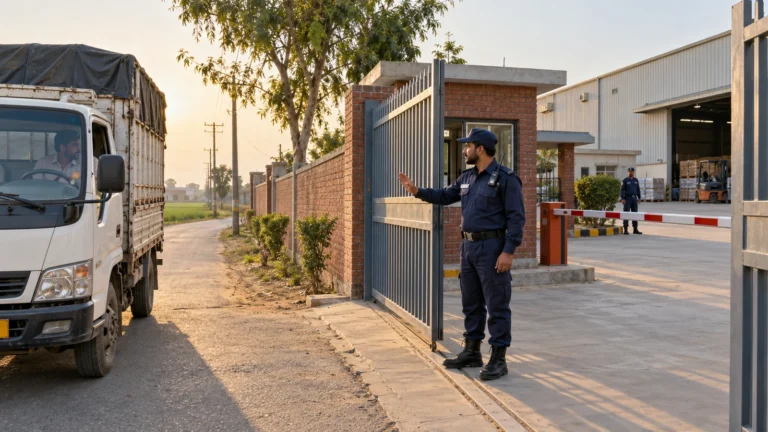
A vehicle arriving at the gate does not prove that a collection is authorised. The driver may have the wrong order, an outdated instruction or only part of the required approval.
For example, a customer’s order might contain a bed, two side tables and a dressing table. Checking only that “bedroom furniture” is being loaded makes it easy to miss an extra piece or dispatch an incomplete order.
A useful release record includes:
- Order or invoice reference.
- Description and number of pieces.
- Vehicle registration and driver details.
- Name of the authorised dispatch employee.
- Confirmation that loading matches the approved release.
- Departure time and any discrepancy.
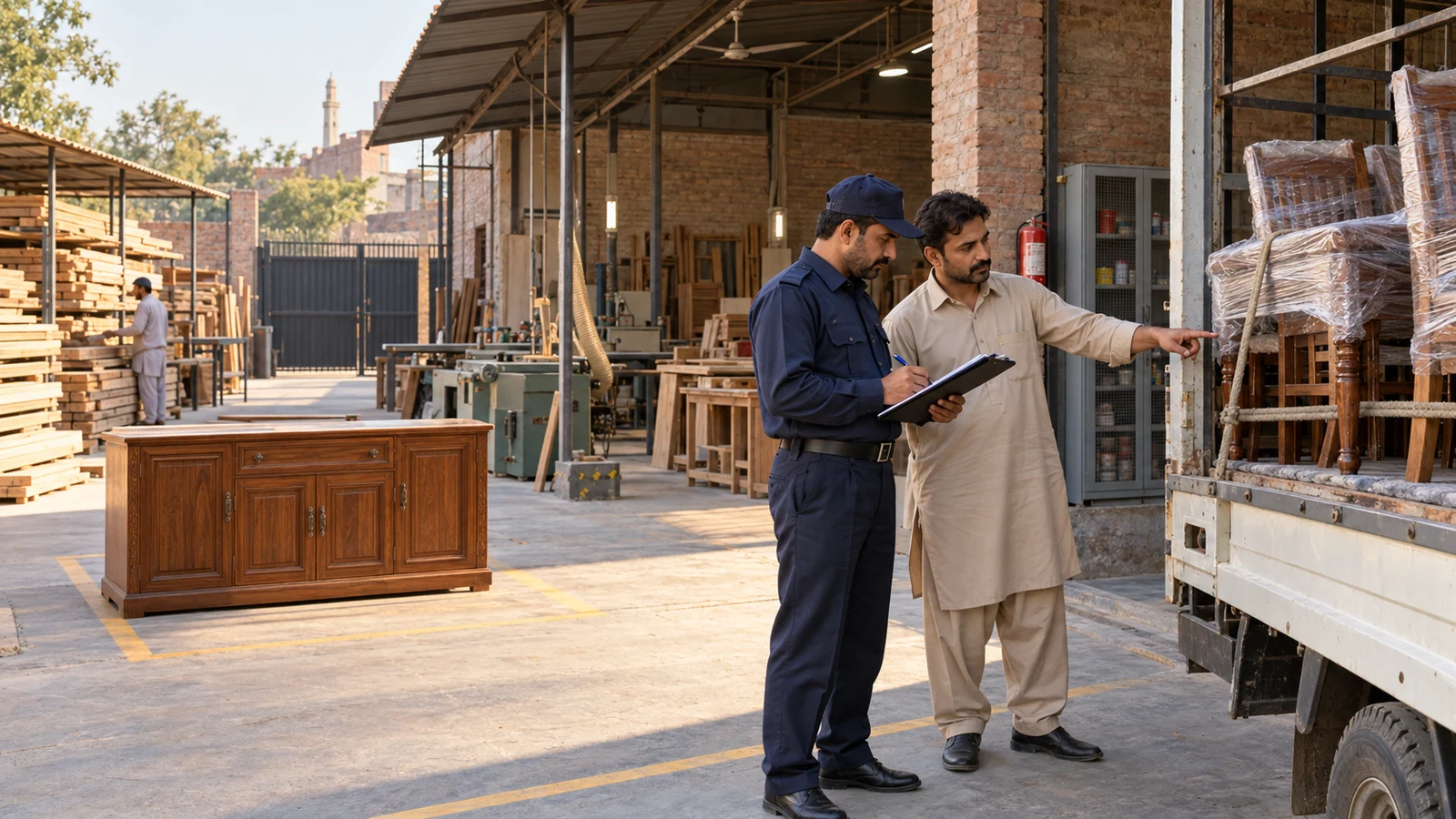
The workshop’s dispatch staff should confirm product identity, condition and order completion. Security checks that the release is authorised and the outward movement is recorded.
Returned furniture, repairs and showroom transfers need the same discipline. Each should have a clear reason for movement and a receiving person.
Separate Customer Access from Production Access
Visitors should be able to ask about an order without walking through cutting or polishing areas.
A simple visitor procedure can record who has arrived, whom they need to meet and where that meeting should happen. Suppliers, fitters and maintenance contractors should report to a designated employee before entering work areas.
For shared premises, write down which business controls each gate and who can authorise collections. A familiar face from a neighbouring shop should not become an automatic release instruction.
Guards need a polite way to handle pressure: “Please wait while I confirm the dispatch approval.” That is easier to enforce when owners and supervisors consistently support the rule.
Treat Sawdust and Varnish Risks as Part of Closing Checks
Wood dust can create fire and explosion hazards. HSE’s woodworking guidance also highlights fires in extraction systems, making dust control and properly designed equipment important workshop responsibilities.
Source: https://www.hse.gov.uk/woodworking/fire.htm
Some solvent based finishing products introduce flammable liquid and vapour hazards. Storage, ventilation and ignition control should follow the product’s safety data sheet and a competent fire risk assessment. General process fire guidance identifies flammable liquid storage, ventilation and wood dust extraction as relevant controls.
Source: https://www.hse.gov.uk/fireandexplosion/workplace.htm
Security personnel can report visible concerns such as:
- Smoking near timber, packaging or finishing materials.
- Waste accumulating around work areas.
- A blocked exit or inaccessible fire equipment.
- Unauthorised work after closing.
- Smoke, a burning smell or a visible spill.
Dust removal, chemical handling, electrical repairs and extraction maintenance belong to trained, authorised personnel. A guard’s round cannot certify a workshop as fire safe.
Where smoke or fire is suspected, guards should follow the emergency plan, raise the alarm, support evacuation and summon emergency assistance. They should not enter smoke filled areas or handle an unknown chemical spill.
Make Closing and Night Handover Specific
“Everything is locked” is a weak handover if a delivery is still pending or a contractor remains inside.
Before the night shift takes responsibility, the workshop supervisor should confirm that workers have left, machinery shutdown has been completed by authorised staff, and housekeeping and finishing area checks have been addressed.
The handover should then record:
- Furniture or timber waiting for an approved late collection.
- Any person still authorised to remain on site.
- Keys issued, returned or still outstanding.
- Doors, shutters and gates checked.
- Lighting, CCTV or alarm faults awaiting action.
- Unresolved hazards and the person responsible for them.
A late collection should require confirmation through an agreed contact. A message forwarded by the driver is not enough on its own.
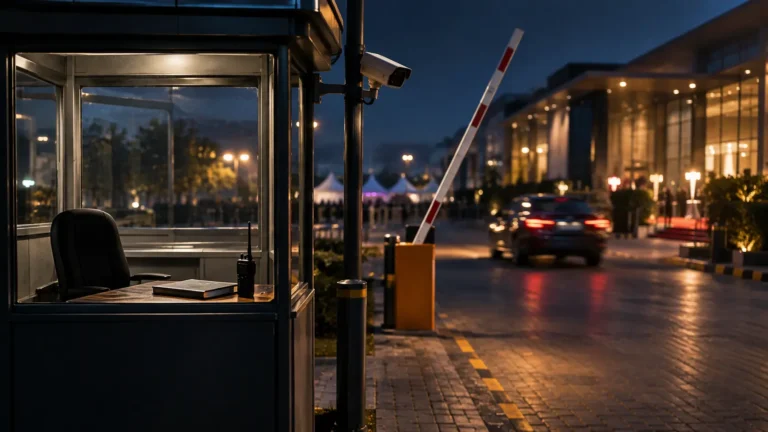
Night patrols should cover accessible storage areas and entrances without leaving the main access point uncontrolled. If the layout makes that impossible for one guard, the coverage plan needs adjusting.
Choose Guard Coverage Around the Work
The right arrangement depends on yard size, operating hours, entrance visibility and dispatch activity. A small shop with one controlled entrance has different needs from a workshop with a separate timber yard and evening loading.
Ask a security provider how it will cover breaks, absences, shift handovers and incidents. Request written duties for material release, visitor access and emergency reporting. These details matter more than a general promise to “watch the premises.”
Clutch Security Services provides guard services that include access control, patrolling and incident reporting. Discuss your property layout and daily operations through its security guard services in Lahore page to establish the coverage your site needs.
Discuss Security for Your Ravi Road Furniture Business
If your workshop has open timber storage, finished orders awaiting delivery or entrances that are difficult to supervise, start with those specific concerns.
Contact Clutch Security Services to discuss guard deployment for your furniture shop, workshop or storage yard on Ravi Road, Lahore. Share your working hours, number of access points and loading routine so the team can discuss a suitable security plan.
Frequently Asked Questions
Can one guard cover a furniture workshop and an open timber yard?
It depends on visibility, distance between areas and activity levels. If a patrol leaves the gate unattended during loading, one guard may not provide adequate coverage. Review the layout and simultaneous duties before deciding.
How should security check furniture delivery vehicles?
Confirm the driver, vehicle and approved order reference. Match the number and description of pieces against the dispatch record, with workshop staff responsible for confirming the correct products and their condition.
Do guards take responsibility for workshop fire safety?
Guards can identify visible concerns, report hazards and assist with the emergency plan within their training. Management remains responsible for arranging competent fire risk assessment, safe working procedures and technical maintenance.
Should waste timber and offcuts need a gate pass?
An approved outward record helps distinguish waste removal from unauthorised stock movement. The workshop supervisor should define what can leave, in what quantity and with whose approval.