Pharmaceutical Industry Security in Lahore: Raw Materials, Finished Stock and Cold Chain
A truck backs up to the dispatch bay a little before midnight. The driver has his papers in order, the seal on the cargo door looks untouched, and the warehouse supervisor went home hours ago. Whoever is on the gate has a couple of minutes to decide whether the batch numbers on the invoice match what is actually stacked on those pallets.
Moments like that are why pharmaceutical industry security in Lahore needs its own plan instead of a copy of what works at a textile unit or a food godown. A sack of active ingredient, a pallet of finished tablets and a carton of insulin all carry a price. They also carry something harder to value, which is the trust of the patient who will eventually take them.
Lahore has a great deal riding on this. A Dun and Bradstreet directory lists roughly 480 pharmaceutical and medicine manufacturing companies in the city, and a good share of their plants and warehouses sit in industrial estates such as Kot Lakhpat and Sundar. This guide looks at the three places where those sites are most exposed, namely raw material storage, finished stock warehousing and cold chain batches, and at what a well run guard deployment should do about each. It comes from the team at Clutch Security Services, a security guard company in Lahore that starts every assignment with a site assessment.
Why Pharma Sites in Lahore Need Their Own Kind of Security
A garment factory loses money when stock walks out of the gate. A drug maker can lose far more, because a batch that nobody can vouch for is worth nothing at all. If a pallet leaves without a record, there is no way to say where it ended up, who handled it or what condition it was in when it reached a patient. That doubt is the real cost of a lapse.
Regulators see it the same way. DRAP’s Good Distribution Practices guideline, in force since March 2023 and aimed at manufacturers as well as distributors and wholesalers, asks for premises that are suitably secure and for storage areas that are clearly marked and open only to authorized people. It expects unauthorized entry to be prevented, usually with a monitored intruder alarm and access control, and it wants visitors accompanied. It even reaches into employment, saying that conditions for staff, contract and temporary workers included, should make it harder for products to land in the wrong hands. Which clauses apply to you depends on your license and activities, so treat this as background and confirm the details with your quality team.
There is a market on the other side of the wall as well. In December 2019, Punjab healthcare officials sealed six units in Lahore that were turning out fake medicines, and they found raw material on the premises along with syrups, capsules and tablets. Nothing in the report says that material came from a licensed plant, so take it as a reminder of demand rather than proof of a theft ring. Still, anyone making counterfeits needs ingredients, packaging and a believable batch history, and a genuine factory’s storeroom holds all three.
Trouble can also start inside. Loaders, drivers, contractors and guards all touch the process at some point, which is why vetting and supervision count for as much as the uniform.
Raw Material Storage: The Quiet Risk Behind the Gate
Raw material attracts less attention than finished product because it looks plain. Sacks of excipient and drums of active ingredient carry no brand and no glamour. Yet they’re costly, they move in bulk, and a shortfall can hide inside normal wastage figures for weeks. Printed packaging is a separate worry. Genuine cartons, foils and leaflets are exactly what a counterfeiter needs to make a fake look right, so a store holding them deserves the same care as one holding tablets.
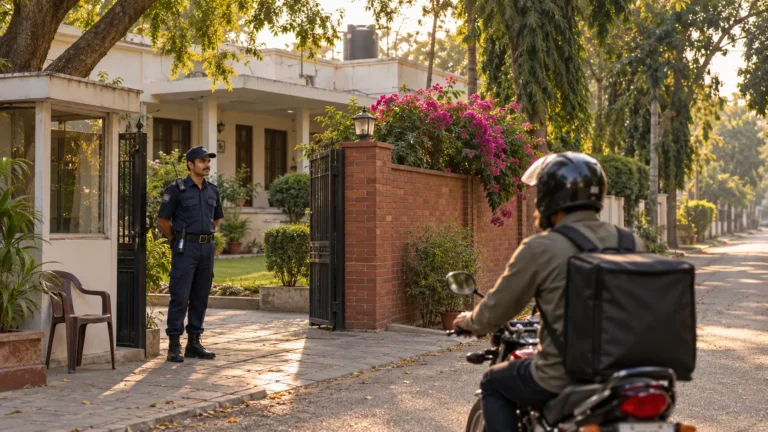
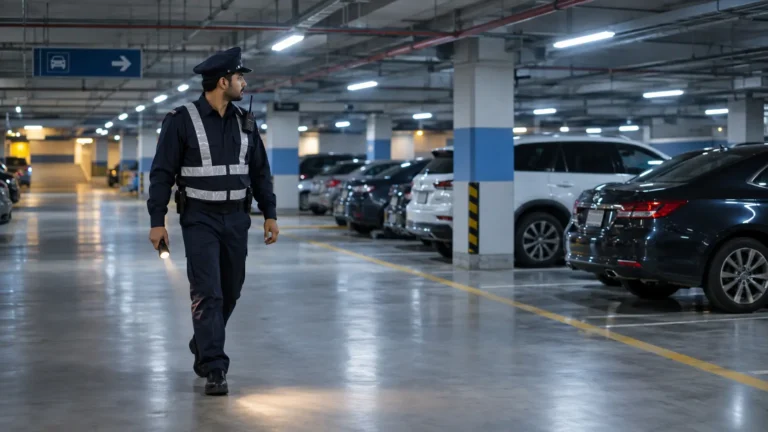
Protection begins at the gate with a firm rule: no inbound truck enters without a matching delivery document and someone from stores waiting to receive it. The officer on duty confirms the driver’s identity, records the vehicle and holds it until stores gives the go ahead. Inside, rooms such as the raw material store, the sampling area and the quarantine cage should open only to people on a named list. Keys are signed out and signed back in, with the register kept at a desk that is staffed around the clock.
Patrols should look at what a thief would care about. A door propped open for ventilation, a pallet shifted close to the boundary wall, a vehicle that lingers beside the store longer than any delivery needs. Random checks of bags and vehicles at the exit, written into plant policy and applied to everyone from loaders to managers, catch a surprising amount of quiet pilferage without singling anyone out.
One boundary needs to stay clear. Guards protect the process, and they do not make quality decisions. Whether a lot is approved, held or rejected belongs to the quality team. The guard’s duty is to make sure that decision cannot be bypassed by someone strolling into the wrong room.
Finished Stock Warehousing: Guarding the Dispatch Bay
Finished goods sit at the other end of the value chain, and the weak spot shifts along with them. In storage, the main exposure is access. At dispatch, it is paperwork and trust. A supply chain security analyst at BSI has pointed out that pharma firms often vet ingredient suppliers and contract manufacturers thoroughly but pay less attention to distributors, who tend to be the weak link in theft and diversion schemes.
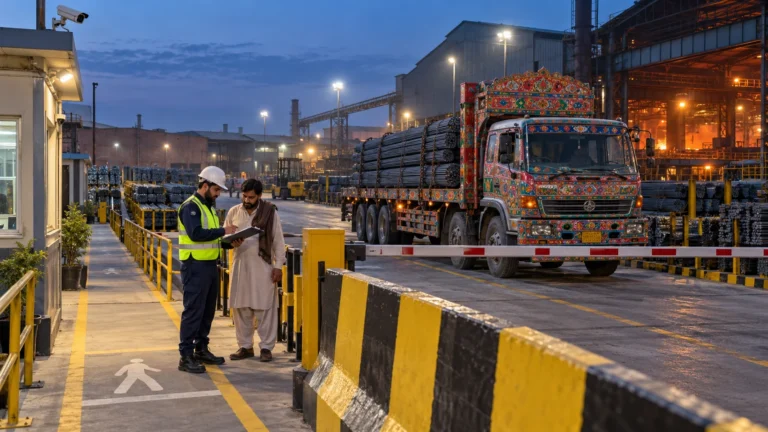
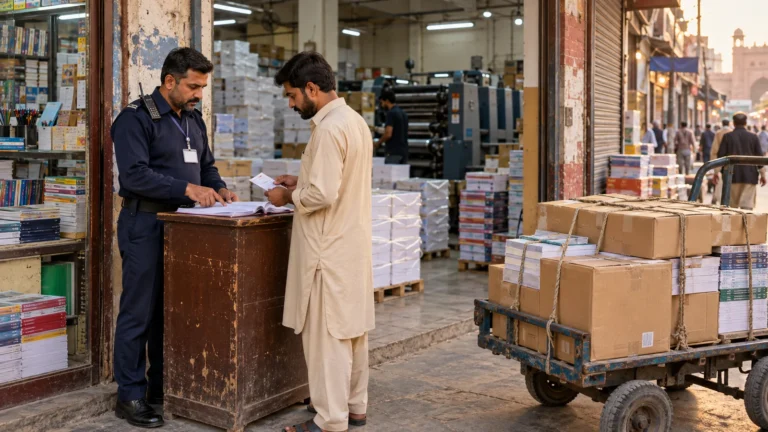
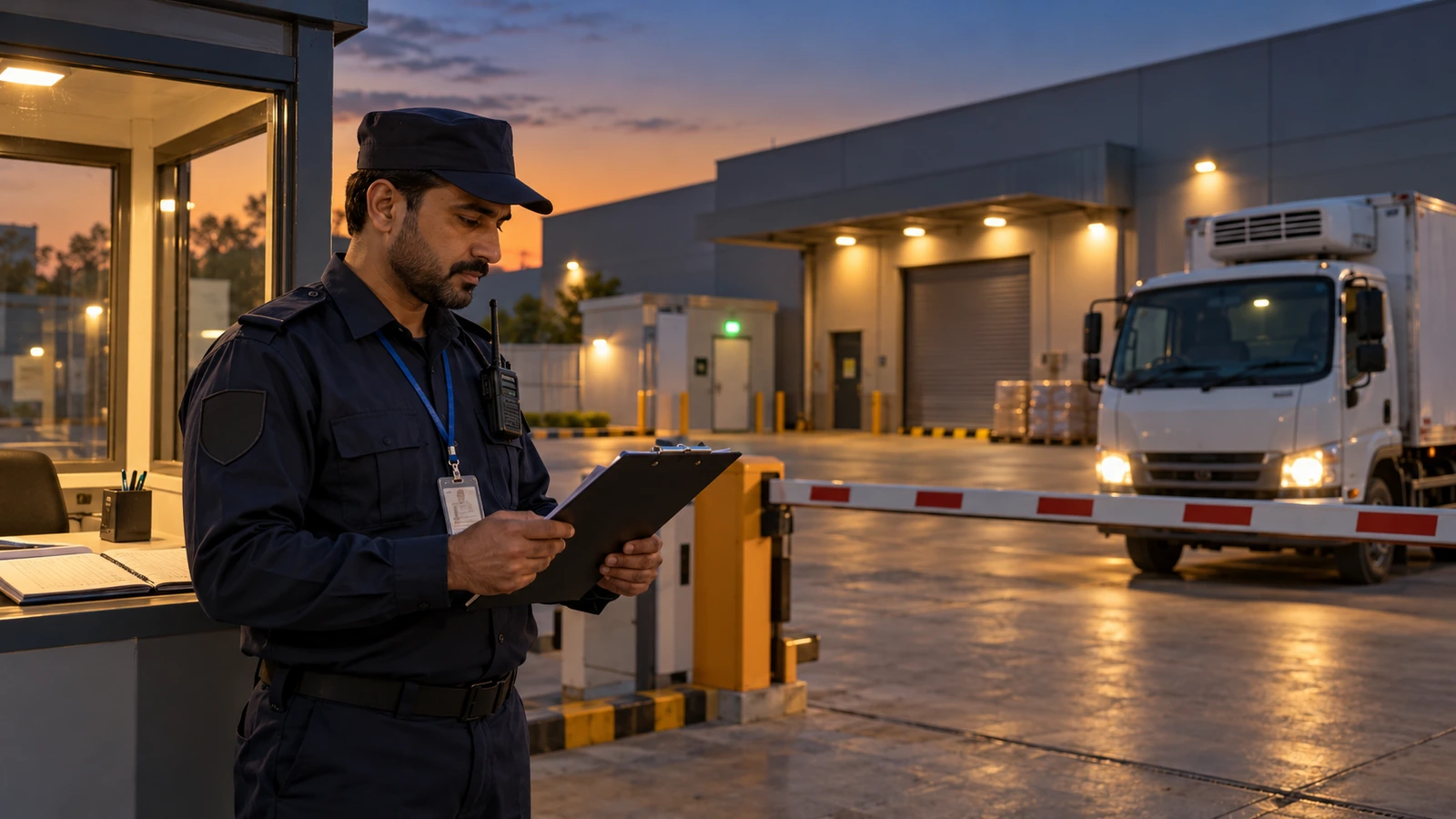
Dispatch is where a lot of stock changes hands in a few minutes. A forged delivery order, a driver with borrowed credentials or a seal swapped after loading can send genuine medicines to the wrong place. At the exit gate, the officer should compare the vehicle number, driver identity and seal number with the dispatch note before the barrier goes up, then log the time. None of this is complicated, but it isn’t automatic either. The value comes from doing it the same way at 2 p.m. and at 2 a.m.
The same guideline asks for adequate separation between receiving, storage and dispatch areas, and for control over goods moving in and out. In practice, the security team should know which bay serves which purpose, and why a forklift turning up at the wrong one after midnight deserves a phone call.
Returns, expired goods and recalled batches need a locked area of their own. DRAP warns that falsified products can slip into the supply chain through returns, and it wants rejected, expired and recalled stock held in a dedicated place with suitable security. Narcotic and psychotropic products call for lock and key storage with separate records. Whoever is on duty should know where these areas are and who may open them.
Thieves also do their homework. After a theft worth roughly 75 million dollars from an Eli Lilly warehouse in the United States in 2010, a security specialist from an industry coalition said the raiders had probably studied the site for a long time, and he urged companies to review any location that is not staffed around the clock. A guard who notices the same car parked across the road three evenings running, or a stranger asking oddly specific questions about shift timings, is doing real security work. Give that person a simple way to report it the same night.
In busy industrial estates, units sit shoulder to shoulder and the same drivers turn up so often that gate staff know them by name. Familiarity helps right up to the moment it becomes a reason to skip a check.
Cold Chain Security for Temperature Sensitive Batches
For anything kept between 2 and 8 degrees Celsius, the range DRAP gives for a refrigerator, security and temperature control are two halves of one job. Vaccines, insulin and many injectable products lose their value if they spend too long outside that band, and the damage is often invisible. A carton that looks perfect on the shelf can still be unusable.
Lahore does not make this easy. Summer afternoons regularly pass 40 degrees Celsius, power can drop without warning, and a loading bay left open for ten extra minutes lets in a surprising amount of heat. Picture a cold room door left ajar after a late stock count, a compressor that trips in the small hours, a generator that fails to take over, or a refrigerated truck idling at the gate with its cooling unit switched off to save fuel. In each case, the first person on the spot is often the one in uniform.
A well briefed guard can cover several of these risks without touching any equipment. Rounds can include reading the temperature display outside the cold room at set times and noting the figure, without opening a door or changing a setting. A flashing light, an audible alert or a door found open should trigger a call list pinned where everyone can see it: the engineer on duty first, then the quality assurance head, then the plant manager. Guards should also know how the generator is expected to behave after a power cut and report it if it has not started when it should.
At the gate, a refrigerated vehicle should not leave until someone has confirmed that the cooling unit is running and the seal number matches the paperwork. If a driver wants to park for a long break with product on board, that conversation belongs to the dispatch supervisor, not to the officer on the barrier.
Cold rooms need an access rule of their own. Only named people go in, every entry is logged, and someone other than the person who wrote the log reviews it. The same discipline applies to third party warehouses and distributor depots that hold your batches.
One honest caution: guards are not a replacement for calibrated monitoring. DRAP expects alarm systems that warn of temperature excursions, set at sensible levels and tested regularly, and it wants every excursion investigated and documented. A guard is the human layer that makes sure an alarm is noticed and acted on at night, when nobody from quality is on site.
What a Pharma Security Deployment Should Cover
Every plant is different, so a good plan starts with a walk through the premises, not a headcount. Use this as a first checklist when you’re reviewing a proposal:
- Gate control: identity checks, vehicle and driver logs, visitor badges and escorts into restricted areas.
- Restricted zones: raw material stores, quarantine and returns cages, controlled drug rooms and cold rooms, each with a named access list.
- Dispatch and receiving: document, seal and vehicle matching on every movement, day and night.
- Key and badge control: a register that is checked against reality, not just filled in.
- Patrols with checkpoints: boundary walls, roofs and side gates included, with times recorded.
- Alarm and camera support: someone watching the screens who knows exactly whom to call.
- Incident reports and handovers: written, timed and reviewed by plant management.
- People: background verified guards, confidentiality undertakings and regular rotation between posts.
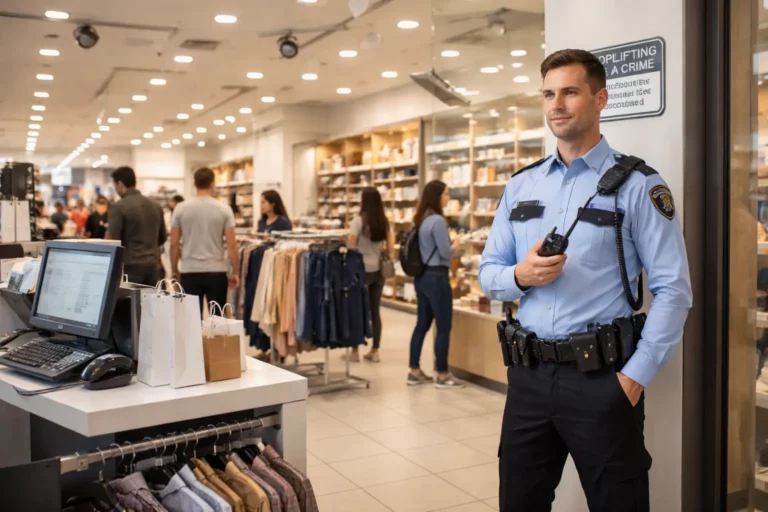
Armed or unarmed? Gate control, visitor management and patrols often suit unarmed staff. A large finished goods godown, a dispatch bay handling high value consignments or a site with a history of incidents may call for armed cover. Settle it after a risk assessment, not because a neighboring plant made the same choice.
If you would like a second pair of eyes on your own layout, contact our team and we will arrange a site assessment.
Choosing a Security Guard Company in Lahore for a Pharma Site
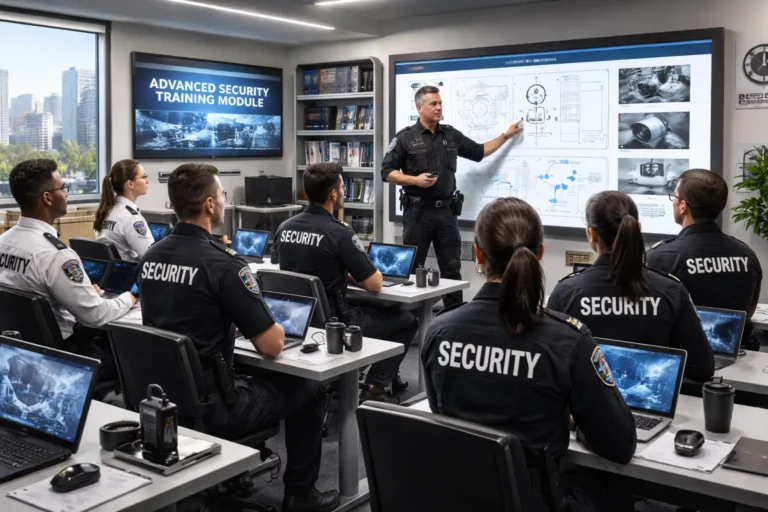
Plenty of firms can supply a uniform. Fewer can run a post inside a regulated facility. Start with the basics: business registration, background checks on every guard and proof of how supervisors inspect posts. Then move to the questions that only matter in pharma. How are guards briefed on restricted areas and quarantine rules? What happens when someone calls in sick at midnight? Who reads the daily logs, and in what format will your quality team receive them?
DRAP’s guideline expects outsourced activities within its scope to run under a written contract and to be checked by audit. Whether or not guarding counts at your site, the habit is a good one: written post orders, agreed duties and records you can show an auditor.
Be wary of the lowest quotation. If one proposal costs far less than the others, check whether it covers fewer hours, skips supervision or leaves out relief staff. A gap at the cold room door can cost far more than the difference in price.
At Clutch Security Services we begin with a site assessment carried out by an experienced security consultant. Field supervisors then visit posts on a regular schedule, and our control room stays active around the clock. If you are comparing options for security guard services in Lahore, ask every company on your shortlist for the same level of detail.
Protect Your Pharma Facility in Lahore
Tell us where your site is, how your stores and dispatch bays are laid out, when trucks arrive and which areas worry you most. Our team will review the details and send a written quotation built around your premises, whether you need a single post or round the clock pharmaceutical security in Lahore.
Contact Clutch Security Services to request a site assessment and quotation for your pharma facility
Call: 0300 1267869
Frequently Asked Questions
What does pharmaceutical industry security include?
It covers the physical protection of raw materials, finished products and cold chain batches through access control, vehicle and dispatch checks, patrols, alarm response and clear records. It works alongside a company’s quality system and doesn’t replace it.
Do pharmaceutical companies in Lahore need armed guards?
Not in every case. The answer depends on what is stored, where the site sits and whether there have been incidents. Many plants use unarmed staff at the gate and inside the premises, with armed cover at the finished goods godown or dispatch bay. A site assessment should settle it.
How do security guards help protect cold chain batches?
They control who enters cold rooms, note temperature readings and alerts during rounds, watch power and generator status, check refrigerated vehicles at the gate and call the right person quickly when something looks wrong. Calibrated monitoring remains the job of your quality and engineering teams.
Can guards look after controlled or narcotic stock?
Guards can protect the room and keep an access record, but custody of controlled stock stays with authorized pharmacy or quality staff. DRAP’s guideline expects these products to be kept under lock and key with separate records.
How quickly can guards be deployed at a pharmaceutical site in Lahore?
Standard requirements are usually in place within 24 to 72 hours, and urgent situations can be handled faster. For a regulated site, a short site assessment first means guards arrive already briefed on restricted areas and routines.