

Protecting Your Property in Pakistan While You’re Living Abroad
Your phone rings at an odd hour and it’s a relative calling from back home, and before they even finish the sentence you already sense something’s wrong. Maybe the gate that used to be locked is standing open. Maybe someone new is living on the ground floor of a house that’s supposed to be empty. Maybe a plot you’ve been paying installments on for years suddenly has fresh boundary markers that aren’t yours.
For the millions of Pakistanis building careers and raising families in the UK, the Gulf, North America, and Europe, this worry sits quietly in the back of the mind. You worked hard for that house, that plot, that piece of land, and now you’re thousands of miles away with no way to simply drive over and check on it yourself.
The good news is that this problem has real, practical solutions. Some are legal, some come down to keeping better records, and some involve having the right people physically watching your property while you can’t. That last part, having reliable eyes and boots on the ground, is where a company like Clutch Security Services usually enters the picture. But before we get to guards and patrols, it’s worth understanding exactly what you are up against.
Why an Empty House Becomes an Easy Target
A property doesn’t need to be valuable to attract attention, it just needs to look unwatched. A house with a stack of undelivered post, dry brown grass, and no lights on after dark tells everyone in the neighborhood that nobody’s checking in. In cities like Lahore or Gujranwala, where land prices keep climbing and empty plots sit on the outskirts for years, this kind of visible neglect is basically an invitation.
Distance makes everything slower to fix. If a stranger starts building a wall on your land, or a “tenant” who was never supposed to have a key stops answering calls, you find out late, sometimes weeks late, and usually through word of mouth from a neighbor. By the time you know, whoever stepped in has often had time to settle in, gather paperwork, or convince a local official they belong there. None of that means you can’t win the situation back. It just means the clock works against you the moment you’re not around to react the same day.
This isn’t a rare fear either. Complaints about illegal occupation, commonly called qabza, filed by overseas Pakistanis run into the thousands every year through government channels, and Punjab set up a dedicated Anti Land Mafia Cell specifically because the problem is common enough to need one.
The Real Threats Facing Property Left Behind
Illegal occupation, or qabza. This is the one every overseas owner has heard about, whether from the news or from someone in their own family’s story. It ranges from squatters who simply move into an unlocked house to organized groups who forge documents and use intimidation to hold onto land they never owned. The Illegal Dispossession Act of 2005 exists specifically to punish this with prison time, which tells you how widespread the issue had become before lawmakers stepped in.
Forged sale deeds and fraudulent transfers. A property doesn’t need to be physically occupied to be stolen. Fake power of attorney documents, forged signatures, or someone impersonating the actual owner during a transaction can result in land being sold out from under its rightful owner, sometimes without them finding out until they try to sell it themselves years later.
Theft and stripping. Vacant houses get quietly picked apart over time. Copper wiring, doors, bathroom fittings, even roof sheets can disappear piece by piece, especially in places that sit empty for a year or more with nobody checking in.
Dishonest caretakers. This one stings the most because it usually involves someone the family trusted. A relative or an informally hired chowkidar who was supposed to be looking after things quietly stops sending rent, lets a friend move in, or looks the other way when something happens because there’s no real accountability keeping him honest.
Boundary encroachment. Open plots and agricultural land are especially exposed here. A neighboring wall creeps a few feet over the property line, or markers shift during construction next door, and without someone checking the boundary regularly, those few feet can quietly become permanent.
Get the Legal Groundwork Right First
Guards and patrols matter, and we’ll get there, but they work best when backed by paperwork that actually holds up. A few things worth sorting out even before you think about physical protection:
A clean, registered Power of Attorney. If you can’t be in Pakistan to sign paperwork or appear before a sub registrar, someone you trust needs the legal authority to act for you. NADRA now runs a digital Power of Attorney service that handles much of the attestation online instead of requiring a physical visit to a Pakistani mission every single time, which has made this considerably less painful than it used to be. Whatever you decide, make sure the POA spells out exactly what your attorney can and can’t do, and get it properly registered rather than leaving it as an informal understanding.
Property records that are actually checked, not just assumed. Land records have moved partly online in several provinces, and it’s worth having someone verify your registry, fard, and tax receipts periodically instead of assuming everything is fine because nothing’s gone wrong yet.
Knowing where to report trouble immediately. If something does go wrong, speed matters more than almost anything else. The Pakistan Citizen Portal exists for exactly this kind of complaint and has a strong track record of resolving land related cases filed through it. Pair that with support from a lawyer or your POA holder, since a portal complaint moves faster when someone can also follow up in person with the relevant office.
Backups kept in two places. Keep original documents safe in Pakistan with someone you trust, and keep scanned copies saved somewhere you can reach from abroad. If paperwork is ever challenged, clean digital copies on hand can save weeks.
Why Physical Protection Still Matters
None of the legal groundwork above stops someone from walking through an unlocked gate while the house sits empty. Paperwork protects your rights on paper. It doesn’t stop a door from being pried open at 3 in the morning, and it certainly does not stop a temporary occupant from becoming a permanent headache before anyone official even gets involved.
This is where the gap between an informal arrangement and a properly run one starts to show. Plenty of families lean on a single chowkidar, often a relative’s suggestion or someone who used to work for a neighbor, and trust him to handle everything solo. It’s understandable, he’s local, he’s inexpensive, and he’s already there. But a lone, unsupervised watchman has no one checking his work either. If he gets careless, gets paid off, or simply isn’t equipped to deal with a determined group of occupiers, there’s no backup and often no way for you to know until it’s too late.
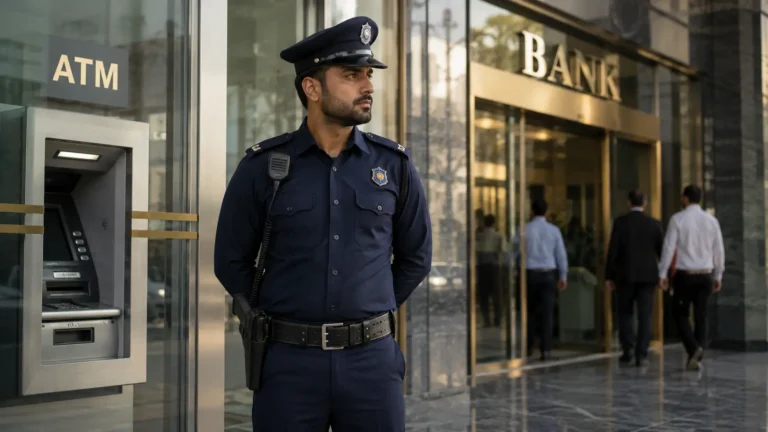
A professionally run guard service works differently. Guards go through background checks before placement, someone senior actually visits the site to confirm they’re doing their job, and there’s a structure behind the person standing at your gate instead of one man hoping nothing happens on his watch.
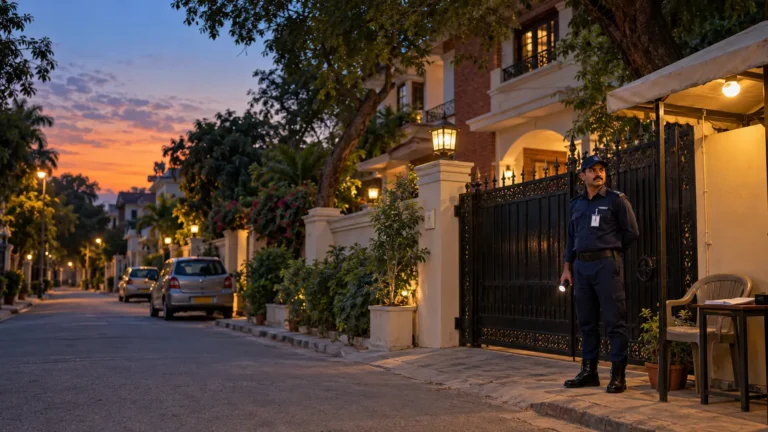
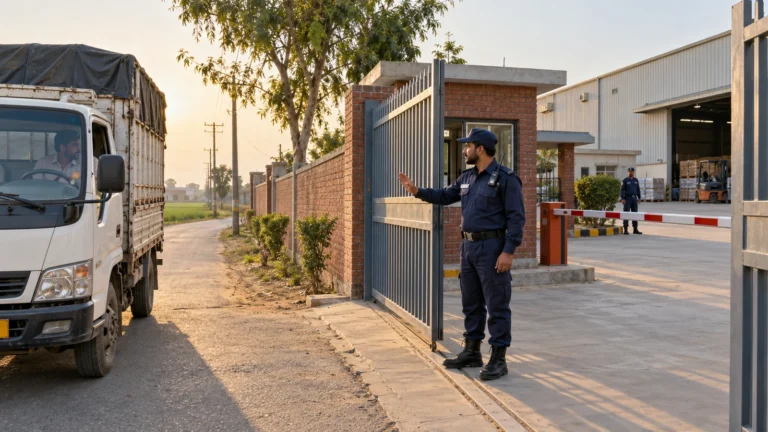
This kind of setup matters most in a few specific situations: a standalone house sitting fully vacant between tenants or renovations, a farmhouse or agricultural plot far enough from other buildings that trouble could go unnoticed for days, and land under construction where materials, equipment, and an unfinished boundary wall all make for an easy target.
What to Look for in a Security Provider From Abroad
Hiring a guard service when you’re not physically there to check on them yourself means placing a lot of trust in a system you can’t see day to day. A few things worth asking about before you commit to anyone:
How do they actually communicate with someone who’s abroad? A good provider sends updates, whether that’s a call, a written report, or photos from a site visit, rather than leaving you to wonder what’s happening until something goes wrong.
Is there supervision beyond the guard on site? One person standing at a gate is only as reliable as that one person. Ask whether a supervisor actually visits the property to check on things, and how often.
Are the guards licensed and properly screened? Private security in Pakistan operates under provincial licensing requirements, and background checks should be standard practice, not an afterthought you have to specifically request.
What happens the moment something looks wrong? A provider worth hiring has a clear escalation process, meaning they know exactly who to call first, whether that’s you, your POA holder, or the police, rather than waiting on instructions from someone asleep on the other side of the world.
Do they actually know the area your property is in? A guard team that regularly works in your property’s city understands local patterns and recognizes who genuinely belongs on that street versus who doesn’t.
This is essentially the standard we’ve built our own process around at Clutch Security, whether we’re covering a residential property in Lahore, a plot out near Kasur, or a family home in Faisalabad or Sialkot. Site assessments happen before anyone is deployed, field supervisors make regular checks rather than relying on one guard to report on his own work, and every guard goes through background verification before ever being placed on a site.
A Quick Checklist for Protecting Your Property
- Get a registered, properly attested Power of Attorney set up with someone you fully trust, and be specific about exactly what they’re authorized to do.
- Have your property documents checked and verified rather than assuming old paperwork is still airtight.
- Keep utility bills paid and arrange for someone to collect post regularly so the place doesn’t visibly look abandoned.
- Do a dated photo or video walkthrough of the property before you leave, or on your next visit, so you have your own record of its condition.
- Replace a single informal caretaker with supervised, professional security, especially if the property will sit vacant for extended stretches.
- Set up a schedule for checking in regularly, whether that’s a monthly report from a security provider or a relative who visits on a fixed basis, so gaps in awareness stay small.
Frequently Asked Questions
Can I report illegal occupation of my property in Pakistan while I’m living abroad?
Yes. The Pakistan Citizen Portal accepts complaints from overseas Pakistanis and has resolved a large share of land related cases filed through it. That said, having a lawyer or POA holder physically able to follow up with the relevant land office or police station tends to move things faster than a portal complaint on its own.
How do I give someone Power of Attorney for my property without traveling to Pakistan?
You can attest a Power of Attorney at your nearest Pakistani embassy or consulate, and NADRA’s online POA service has moved a large part of that process online, cutting down how often you need to appear in person.
Is a boundary wall and a locked gate enough to protect an empty house?
On their own, not really. A wall and a lock slow someone down, but they don’t stop a determined occupier, and they don’t tell you anything is wrong until you happen to hear about it from someone else. Regular, visible monitoring is what actually catches a problem early.
How quickly can Clutch Security place guards at a residential property?
For most standard requests, deployment happens within 24 to 72 hours of the site assessment, with faster turnaround available for urgent situations.
Owning property in Pakistan while you build a life somewhere else shouldn’t mean carrying a constant worry about it in the back of your mind. With the right paperwork in place and the right people physically watching over your house, plot, or land, you can go months without thinking about it, and that’s exactly the point.
If you have a property in Lahore, Gujranwala, Faisalabad, Sialkot, or Kasur that needs proper eyes on it while you’re away, get in touch with our team and we’ll walk you through what protection would actually look like for your specific situation, no pressure, just a straightforward conversation.


2 Comments