Warehouse and Fulfillment Center Security for Lahore’s Growing Ecommerce Sector
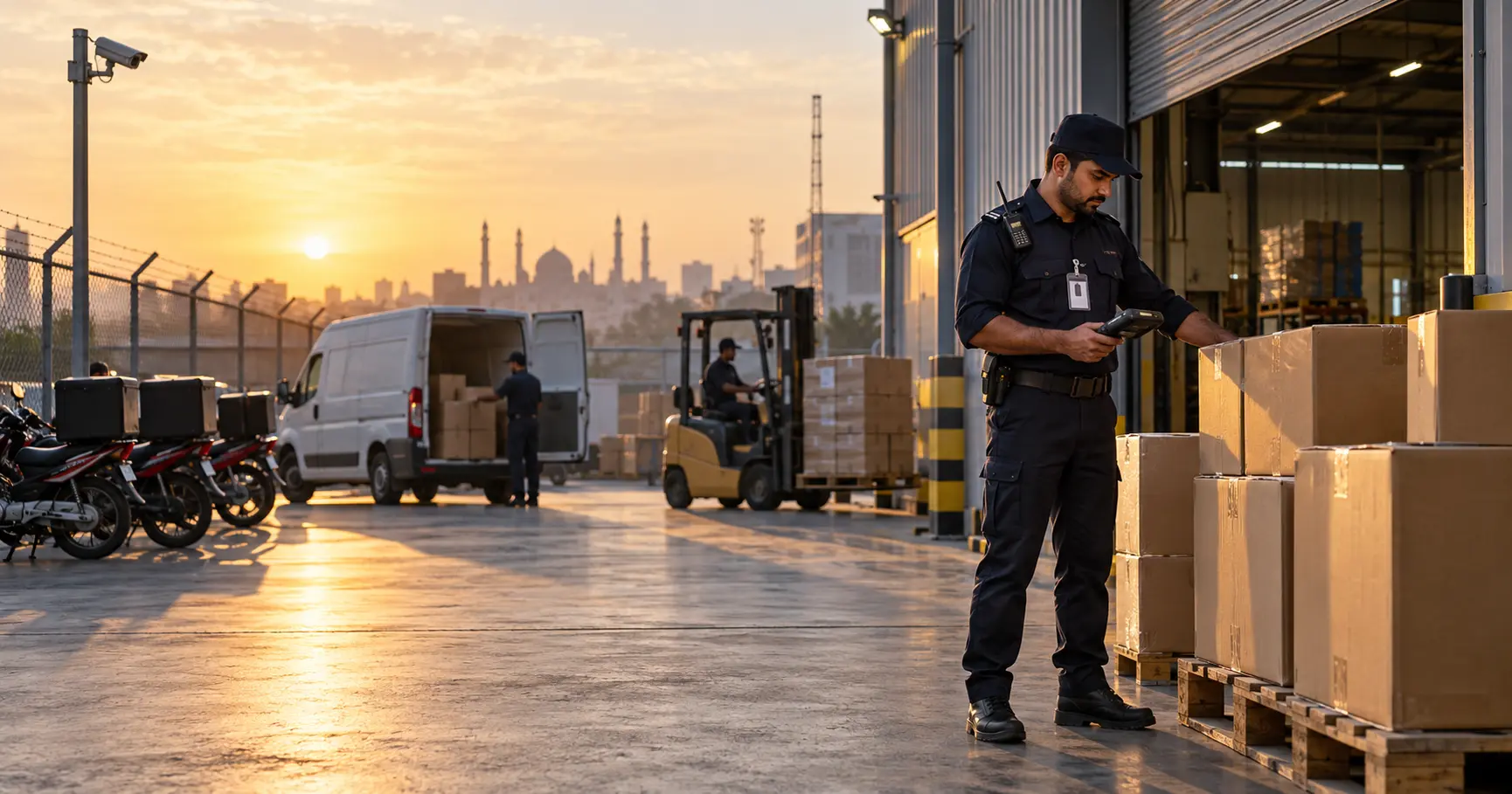
Sundar Industrial Estate empties out by evening for most of the factories around it, but a fulfillment center a few streets over on Raiwind Road tells a different story after dark. The loading dock shutter stays up, a forklift keeps stacking pallets of parcels, and half a dozen riders sit on their bikes waiting for the next batch to clear packing so they can start the morning’s first delivery run. Nobody here watches the clock the way a factory floor does. This building runs on a promise made to a customer somewhere in Model Town or Faisalabad that their order ships tonight, whatever time it actually is.
That difference matters more than most warehouse owners realize once they start renting floor space to online sellers or 3PL clients. A godown holding raw material or finished stock sits mostly still between deliveries, and a guard’s job there is largely about noticing what changes. A fulfillment center never sits still. Parcels move in from dozens of sellers, get picked, packed, and pushed back out the same gate within hours, often with cash from yesterday’s cash on delivery orders still sitting in an office drawer waiting to be counted. Treating this kind of site like an ordinary storage warehouse misses half of what can go wrong.
Clutch Security Services works with warehouse owners, third party logistics operators, and individual online sellers across Lahore, and this piece looks at what makes a fulfillment operation genuinely different to secure, where the real losses tend to happen, and what a solid guard deployment does about both.
Why Warehouses and Fulfillment Centers Are Multiplying Across Lahore
None of this is happening by accident. Pakistan’s ecommerce market crossed roughly $5.8 billion in 2025 and is still expanding by 10 to 15 percent a year, with online sales still making up less than 5 percent of total retail, which points to a lot of room left to grow. A good share of that growth runs through the same city where the industry started. Lahore is where Pakistani ecommerce effectively began, with Daraz launching here in 2012, and the platform alone reported close to $926 million in gross merchandise value in 2025, making it the country’s largest online retailer by a wide margin. how to start an ecommerce business in pakistan in 2026 sourcing compliance selling on alibabacom px002dd3o +2
The city’s role goes beyond history. In 2022, Daraz brought in Cainiao, Alibaba’s logistics arm, to build one of South Asia’s first fully automated distribution centers, and Lahore was one of only two cities chosen for it, alongside Karachi, with each facility spanning more than fifty thousand square meters. That kind of investment does not land in a city that lacks the road access, land, and labor to support it, and Lahore sitting on the N5 and M2 motorways, close to Allama Iqbal International Airport and the Lahore Dry Port, is exactly the kind of connectivity a fulfillment operation needs to move parcels fast. arabnewsracklify
What that means on the ground is more sellers renting warehouse floor space along Raiwind Road and inside Sundar Industrial Estate, more 3PL operators setting up sorting and packing lines, and more buildings that used to hold sacks of grain or bales of cloth now holding shelves of mobile accessories, cosmetics, and clothing waiting to ship. Most of these buildings were rented and fitted out for speed, not protection, and security tends to get added later, usually after something has already gone missing.
Why a Fulfillment Center Is a Different Kind of Security Problem
A few things separate this kind of site from a standard warehouse or factory.
Nothing sits still long enough to count. A finished goods godown can run a stock count on a quiet Sunday. A fulfillment center rarely has a quiet day, since parcels are constantly arriving, being sorted, and leaving again, which makes it easy for a small loss to disappear into normal daily movement instead of standing out.
Cash still travels with the boxes. Card and wallet payments are growing, but cash on delivery still accounts for roughly 90 percent of ecommerce orders in Pakistan. That means a fulfillment center or last mile hub is not only protecting shelves of stock, it is also holding physical cash collected by riders, sitting somewhere on site until someone reconciles and banks it, often overnight. propakistani
Most people walking through the gate do not work for the company. A factory has a fixed workforce guards get to know over time. A fulfillment center deals with riders from several different courier services, drivers from different sellers dropping off stock, and third party staff moving through the same entrance daily, most of whom the site’s own management has never formally verified.
Returns create a second flow going the wrong way. Reverse logistics is a normal part of the business now, and a returned item coming back through the gate is easy to log as received on paper without it ever reaching the shelf it belongs on.
Sale events multiply everything at once. A big promotional weekend can double or triple parcel volume and rider traffic overnight, and floor supervision rarely scales up to match. That gap is exactly when problems tend to surface.
Where Fulfillment Centers Actually Lose Stock and Cash
The losses here rarely look dramatic. They build up in small, repeated gaps rather than one obvious break in.
At the picking and packing stations. An item gets pulled off the shelf but never makes it into the box it was meant for, and the mismatch only surfaces weeks later during a stock reconciliation.
At the rider handover point. A parcel gets scanned as dispatched, but what physically leaves with the rider does not quite match the manifest, especially when handovers happen fast during a peak shift and nobody double checks the count.
Inside the returns cage. A returned unit gets marked back into inventory on the system well before, or sometimes without, being physically checked back onto the shelf.
With cash before it is banked. Uncollected COD cash sitting in a drawer or a cash box overnight is a soft target, particularly at sites without a clear handover and custody protocol.
Overnight and during off hours. Round the clock operations mean night shifts with thinner staffing still cover the same footprint as the busy day shift, and that gap is where most opportunistic incidents cluster.
What a Real Warehouse and Fulfillment Center Security Plan Covers
A guard standing near the gate is not a security plan by itself. A solid one covers several layers together.
A site assessment before anyone gets deployed. A consultant should walk the floor first, mapping dock doors, racking zones, the returns cage, and the traffic pattern parcels actually follow, before deciding how many guards go where and on which shift.
Gate and dock control that actually checks something. Every rider, courier partner, and delivery vehicle gets logged and matched against a manifest or gate pass rather than waved through because the uniform looks familiar.
Access control for storage and picking zones. Not everyone working the floor needs the ability to walk freely into the high value SKU racks or the returns cage, and limiting who can enter closes off a lot of casual opportunity.
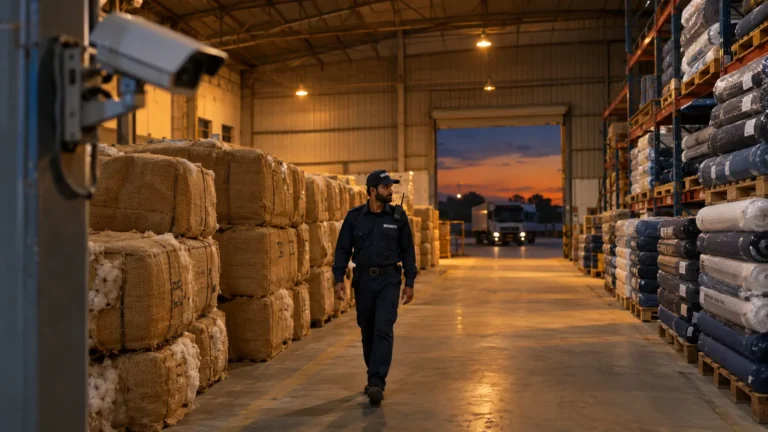
Scheduled and randomized patrols. Perimeter walls, the parking area, the loading bay, and storage zones all need regular rounds logged through a checkpoint system, so there is a record of what was actually checked and when.
A clear protocol for cash, not just stock. Guards need training on how COD cash gets received, logged, and secured until collection or deposit, since this is often the softest and least supervised point in the whole operation.
Armed coverage where the risk profile calls for it. Sites holding higher value categories such as electronics or mobile accessories, or handling larger cash volumes, usually justify armed guards, while a general picking floor can often run safely on trained unarmed staff.
Supervision that continues after deployment. Field supervisors need to visit the site, confirm guards are where they should be, and follow up quickly when a patrol log or an incident report shows something worth a closer look.
Why This Needs a Licensed Security Partner, Not an Informal Arrangement
Plenty of warehouse operators and smaller 3PLs scaled their storage space faster than they scaled their security, and it is common to find a facility holding real inventory value still relying on a retired relative or a driver’s cousin sitting near the gate on a plastic chair. It works fine until the month it doesn’t.
A licensed security company brings a few things an informal setup simply cannot. Guards go through background verification before they are ever placed on site, so there’s an actual record of who is watching a facility full of someone else’s stock. Training covers gate procedures, access control, and emergency response rather than just showing up in uniform. Deployment comes with documentation that complies with provincial regulations for private security operations, which matters if a marketplace or an international brand ever asks to review a 3PL’s facility security as part of a seller or supplier audit. And supervision means someone above the guard is accountable for how the site performs, not just the guard standing at the post.
For sellers and 3PLs planning to scale further, this last part carries real weight. As more brands ship through Lahore based fulfillment partners, a documented and well supervised guard deployment becomes one more box that gets checked without a scramble, rather than a gap that shows up during due diligence.
Security Across Lahore’s Warehousing and Logistics Corridors
Lahore’s warehouse space isn’t concentrated in one pocket of the city. Clusters sit along Raiwind Road and inside Sundar Industrial Estate, close to established logistics parks such as Nathe Khalsa Logistics Park, Agility Logistics Park, and Omni Logistics, with additional storage spread across the Ferozepur Road and Multan Road corridors. Monthly lease rates in these areas can range from around sixty thousand rupees for a smaller unit up to well over three million for a larger, higher grade facility, and rent is rarely the only cost worth planning for once real inventory starts sitting inside. unisco
Our security services in Lahore already extend across these industrial and logistics zones alongside the commercial and residential coverage the city is better known for, with deployment plans built around how each site actually operates rather than one fixed package. A picking floor running three shifts needs a different plan than a small storage unit that only sees a handful of trucks a week, and that difference should show up in the guard count, the shift pattern, and the training, not just the invoice.
For a broader look at securing production and storage sites more generally, our earlier piece on securing a factory or industrial facility in Pakistan covers ground that applies well beyond ecommerce too.
If your warehouse or fulfillment center is currently running on a guard nobody formally verified and a hope that nothing goes wrong on the night shift, that’s worth fixing before a bad month forces the issue. Contact Clutch Security Services for a site assessment built around how your facility actually moves stock, from the gate to the shelf to the rider handover, and get a guard deployment plan that covers what a standard warehouse quote usually misses.
Frequently Asked Questions
Do fulfillment centers need armed guards, or is unarmed security enough?
It depends on what’s stored and how much cash moves through the site. Higher value categories such as electronics or mobile accessories, or larger COD cash volumes, usually justify armed coverage at key points like the cash office or the main gate, while general picking and packing floors can often run safely on trained unarmed staff. A site assessment settles this rather than a blanket rule for every facility.
Can a security company cover just the loading dock and storage racks, not the whole facility?
Yes. Coverage can be scoped to specific zones such as the dock, the high value racking area, or the returns cage, depending on budget and risk. Many operators start with coverage at the highest risk points and expand once they see how it performs.
How is warehouse security different for a 3PL handling stock for several ecommerce sellers?
A multi client 3PL needs stricter access separation between different sellers’ inventory, clearer documentation of who picked and packed what, and guards trained to notice discrepancies across several inventory systems rather than just one. The volume of outside riders and drivers moving through daily is usually higher too, which raises the importance of gate verification.
Should the security team be involved in handling COD cash?
Security staff should be trained on how cash gets received, logged, and secured on site, even if a separate finance team handles the actual reconciliation and banking. Leaving cash handling completely outside the security plan is one of the more common gaps in fulfillment center setups.
How quickly can guards be deployed for a new or growing fulfillment center in Lahore?
Standard deployment typically takes 24 to 72 hours once a site assessment is complete, with faster turnaround available for urgent situations. Facilities planning a launch or a seasonal scale up benefit from booking the assessment a few weeks ahead rather than waiting until the site is already live.