Basement and Parking Lot Security: The Risk Malls Often Overlook
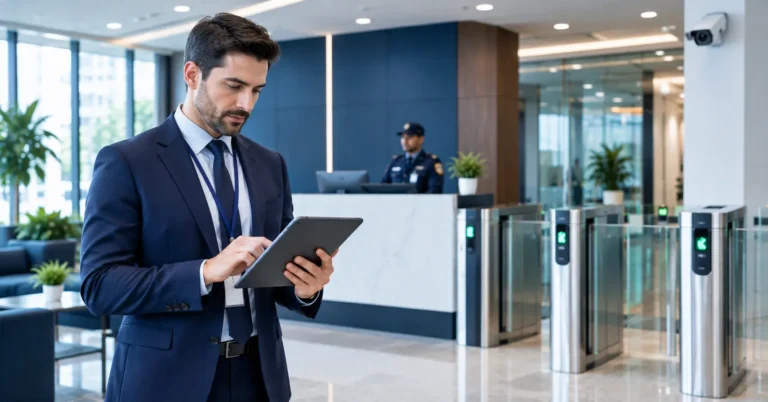
Shopping malls spend heavily on their entrances. Bright lighting, uniformed guards at the main doors, metal detectors, and rows of cameras all send one clear message to visitors: this place is watched. Walk down one level to the basement or out to the parking lot, though, and that same level of attention often disappears. Dim corners, thinner camera coverage, staff-only doors propped open for convenience, and guards who rarely patrol past the ground floor create exactly the kind of gap that criminals look for.
For mall owners and facility managers, this is not a small oversight. Basements and parking areas are where shoppers are most exposed, carrying bags, unlocking cars, or walking alone to a vehicle parked far from the entrance. These zones also house generators, electrical panels, storage rooms, and loading docks, all of which need their own layer of protection. Treating them as an afterthought puts people and property at risk in ways the front lobby never faces.
Why These Areas Get Overlooked
Ground floor security gets the most attention because it is what visitors see first. Management naturally invests where the impression matters most, and basements or parking structures get treated as functional space rather than public-facing space. Budgets and guard deployment tend to follow that thinking, even though foot traffic through these areas can rival the sales floor above.
There is also a visibility problem. Concrete pillars, ramps, parked vehicles, and poor lighting create blind spots that a single roaming guard cannot realistically cover. Camera coverage here is frequently thinner too, installed to satisfy a checklist rather than to actually eliminate dead zones. Add long operating hours, several vehicle entry and exit points, and staff or vendor access that is harder to track, and you get a section of the property that is structurally tougher to secure than the retail floor above it.
The Real Risks Hiding Below and Outside
A few incidents keep showing up across malls and shopping complexes in Pakistan, and they tend to follow familiar patterns.
Vehicle theft and break-ins. Cars sitting parked for hours are an easy target. Someone who knows a parking level lacks active patrols can strip a vehicle or drive it off within minutes, particularly in dim corners or during shift changes when coverage briefly thins out.
Armed robbery near vehicles. Shoppers loaded with bags and distracted by their phones or their kids make easy targets right as they reach their car. This is one of the most common street crime patterns reported around commercial areas in Pakistani cities, and it plays out just as easily in a mall’s own parking lot as it does on a public road.
Assault and harassment in blind spots. Stairwells, lift lobbies, and the far corners of a parking level are where women and solo visitors report feeling least safe. Weak lighting and low guard visibility make these spots attractive to opportunistic offenders.
Unauthorized access through service areas. Loading docks, staff entrances, and basement storage rooms rarely get the same scrutiny as the main entrance. A propped-open service door or an unchecked vendor delivery can become an easy way in for someone with bad intentions, or an easy way for internal theft to slip past unnoticed.
Fire and mechanical emergencies. Basements typically hold generators, transformers, and electrical rooms. Without trained personnel checking these underground levels on a set schedule, a small fault can turn into a serious hazard before anyone notices, and evacuation routes that go unmonitored slow down response exactly when every minute counts.
A Real Example From Pakistan
In 2021, a family in Karachi’s Gulistan-e-Jauhar area was held up at gunpoint in broad daylight, moments after parking outside a shopping mall. Two armed men approached as the family stepped out of their vehicle, took their belongings, and escaped on a motorcycle within seconds. The whole incident was caught on camera, yet nobody intervened in time because no active patrol was positioned close enough to react.
Cases like this are a reminder that a camera recording an incident is not the same as a guard preventing one. Footage helps with investigation after the fact. It does nothing for a family standing in front of a gun. That gap is exactly why active patrolling, not passive surveillance alone, has to sit at the center of any serious parking and basement security plan.
What Proper Basement and Parking Security Actually Looks Like
A mall that takes these areas seriously builds its plan around a few core pieces, not just a guard stationed near the entrance.
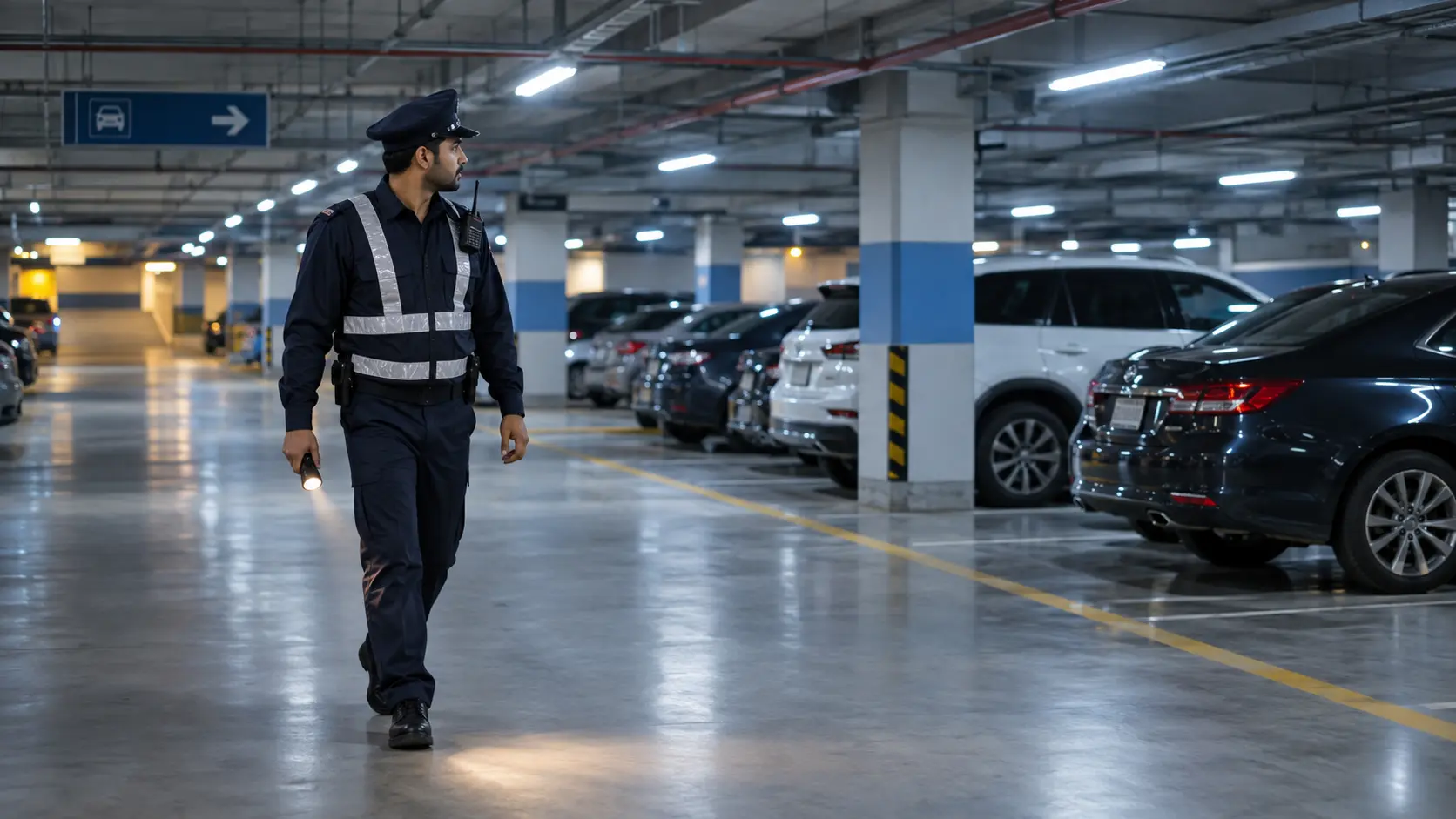
Dedicated patrol routes. Basements and parking levels need their own patrol schedule, separate from the main floor rotation, with guards checking blind corners, stairwells, and vehicle rows at a set frequency rather than an occasional pass-through.
Access control at service points. Loading docks, staff doors, and vendor entrances should be logged and monitored the same way the main entrance is, with clear rules on who can enter, when, and with what verification.
Coordinated CCTV and lighting. Cameras only help if someone is watching the feed and the area is lit well enough for the footage to actually be useful. A proper site assessment should map every dark corner and dead camera angle before an incident forces the issue.
Stronger guard presence during peak hours. Evening shopping hours and weekends see the heaviest traffic through parking areas, which is exactly when staffing should be at its strongest rather than stretched thin.
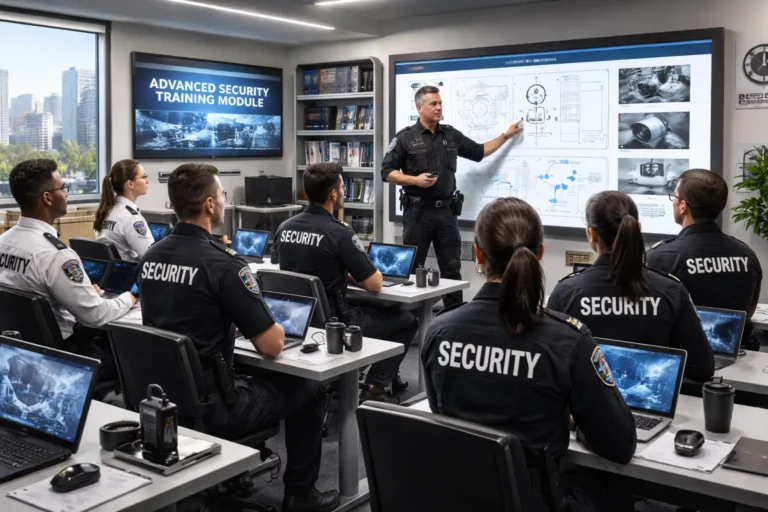
Emergency response training. Guards assigned to basement and utility zones should know fire protocols, evacuation routes, and how to handle a mechanical or electrical emergency, not just how to check IDs at the door.
Signs Your Current Setup Has Gaps
A few quick questions tend to reveal how exposed a property actually is:
- Are guards ever assigned specifically to the parking level, or do they only pass through now and then?
- Is there a documented patrol log for basement and parking areas, or is coverage informal?
- Do service and staff entrances get checked as carefully as the main doors?
- Would your team notice within minutes if someone propped open a back door?
- Has a security consultant ever walked the basement and parking areas specifically, rather than assessing the mall as a whole?
If the honest answer to most of these is no, the property likely has a gap worth closing before it turns into an incident.
How Clutch Security Services Helps
At Clutch Security Services, we treat basement levels and parking areas as their own security zone, not an extension of the main floor. Our approach for malls and shopping complexes starts with a site assessment that specifically maps blind spots, entry points, and traffic patterns across every level of the property, not just the ground floor.
From there, we deploy trained armed or unarmed guards based on the actual risk profile of each area, set dedicated patrol routes for parking and basement levels, and put access control procedures in place at every service and staff entrance. Field supervisors carry out regular checks to confirm guards are covering their assigned zones and following post orders, so coverage does not quietly slip once the contract is signed.
We currently support commercial properties, including shopping centers, across Lahore, Gujranwala, Faisalabad, Sialkot, and Kasur, with guards ready for deployment within 24 to 72 hours for standard requirements.
Talk to Us About Securing Your Property
If your mall’s basement or parking areas have not had a dedicated security review, now is a good time to get one. Our team can walk your property, point out the gaps that matter, and put together a plan built around how your location actually operates day to day.
Contact Clutch Security Services to book a site assessment or request a quotation for your property.